FIAA 2026: Higer steps up its European push
Chinese manufacturer Higer, which is already present in 30 countries and regions across the continent, has ambitious plans for further expansion in the European market. In line with this ambition, it brought four vehicles to the FIAA 2026 exhibition held in Madrid between 22 and 24 September. The Suzhou-based bus manufacturer presented a competitive offering in the urban, interurban and coach segments, and, reversing its previous role in the European market, is also looking to enter the ranks of chassis manufacturers supplying external bodybuilders.
The smallest vehicle on the stand was the all-electric Azure 9 urban midibus, which Higer presents as a product developed specifically for the European market, although it is also available in certain South American countries. Since its launch in 2023, the type has already been sold in smaller and larger quantities in several European countries, including Italy, Luxembourg, Belgium and Iceland. Of particular note from a Hungarian perspective is that, in principle, such midibuses are also set to arrive for HOMM Kft.’s local services in Biatorbágy through Goldi Mobility, likely rebadged under the latter company’s brand name.
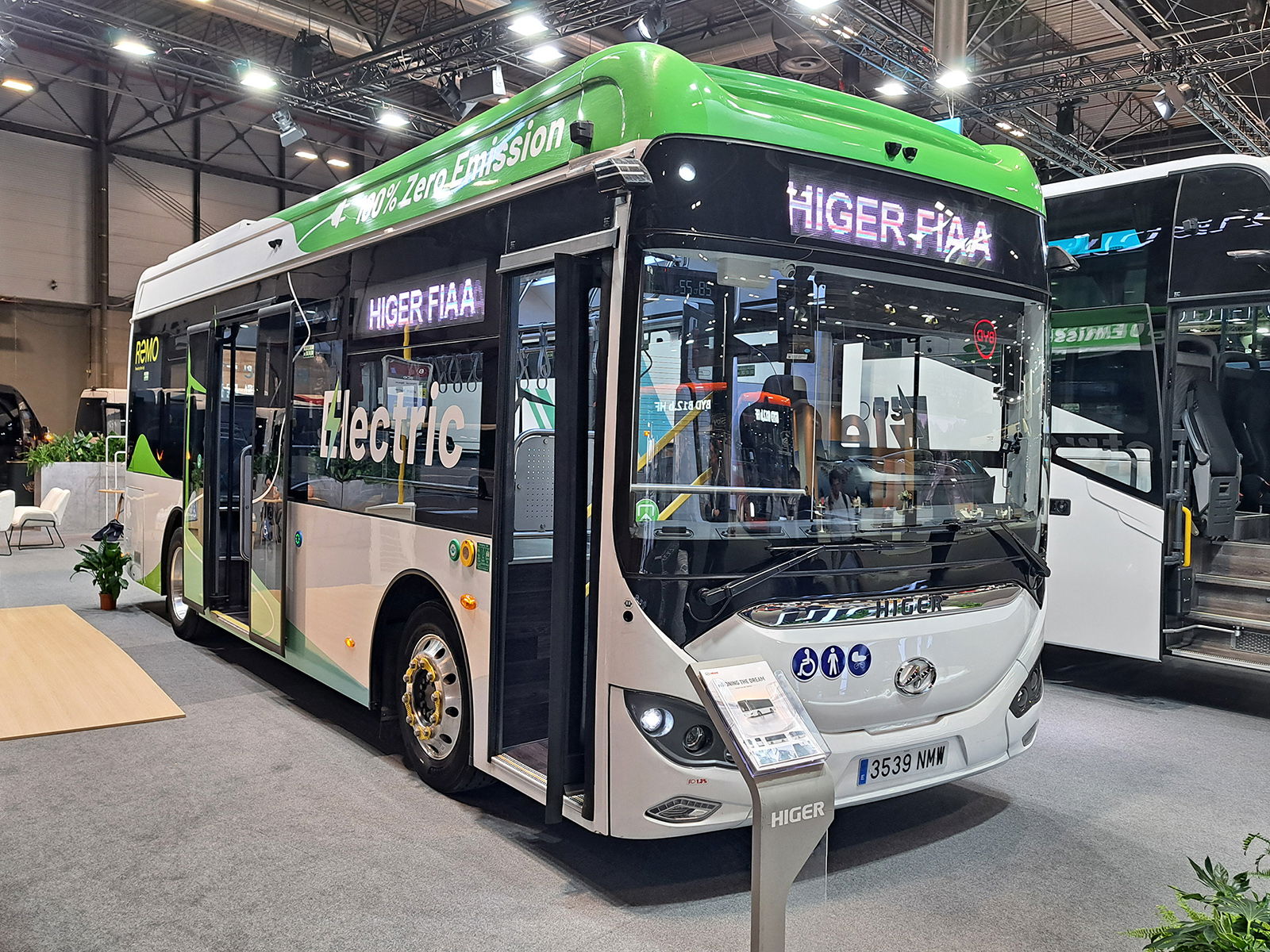
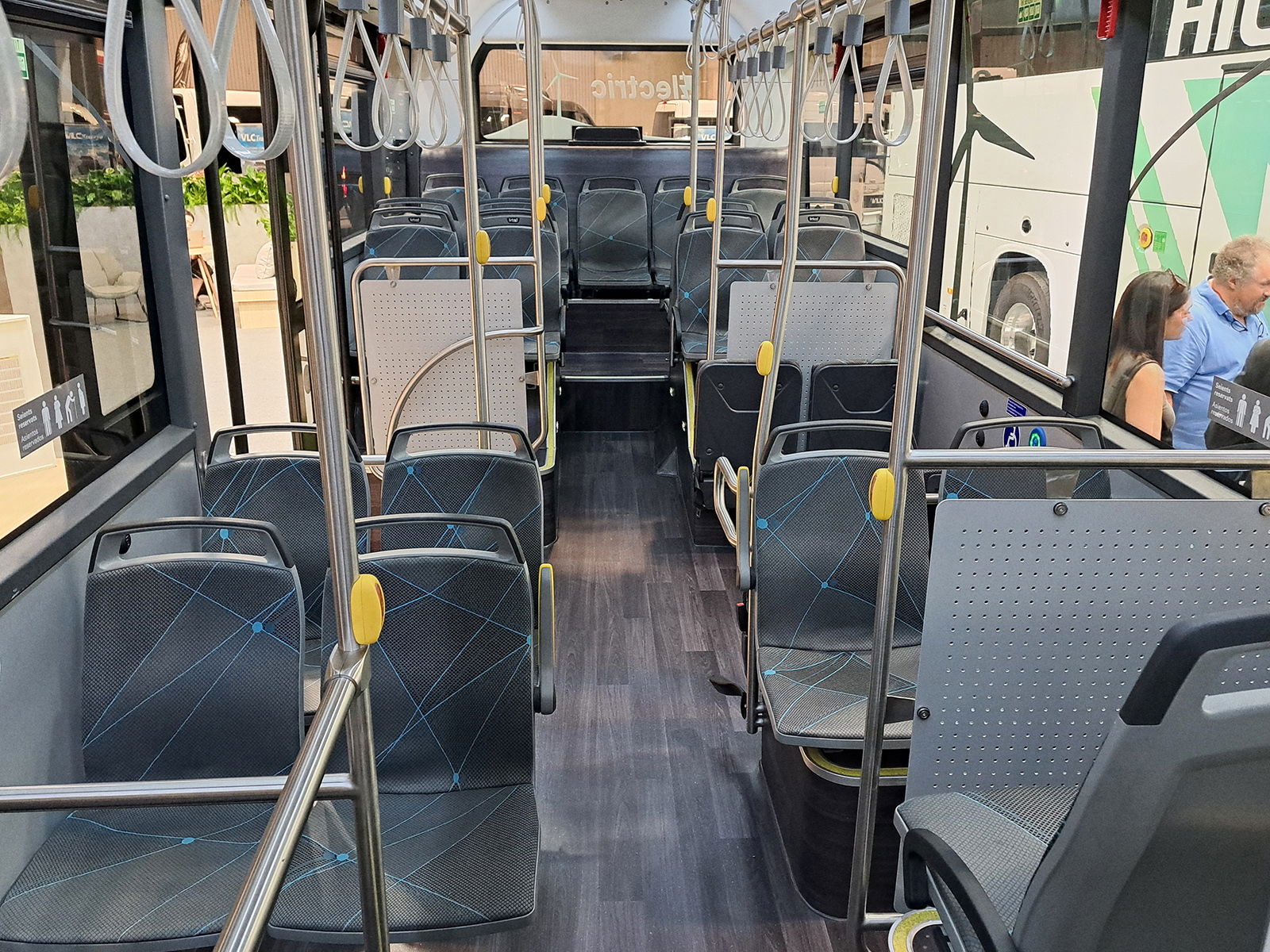
The almost 9-metre-long, low-entry midibus features the 1-2-0 door layout customary in this category. The example exhibited in Madrid was fitted with Kiel CITOS passenger seats. Higer also generally emphasises its use of components sourced from Europe; according to the company, all key components are products of European brands. Naturally, the bus also has a kneeling function, while the front axle features independent suspension. The traction battery pack supplying the vehicle has a total capacity of 268.7 kWh; officially, only that it is made by a globally leading brand has been disclosed. The vehicle is built with a full CAN bus system and hardware configuration and software logic tailored specifically to the needs of European operators. Its equipment also includes the so-called T-BOX, which enables the vehicle’s condition to be continuously monitored through a cloud-based platform.
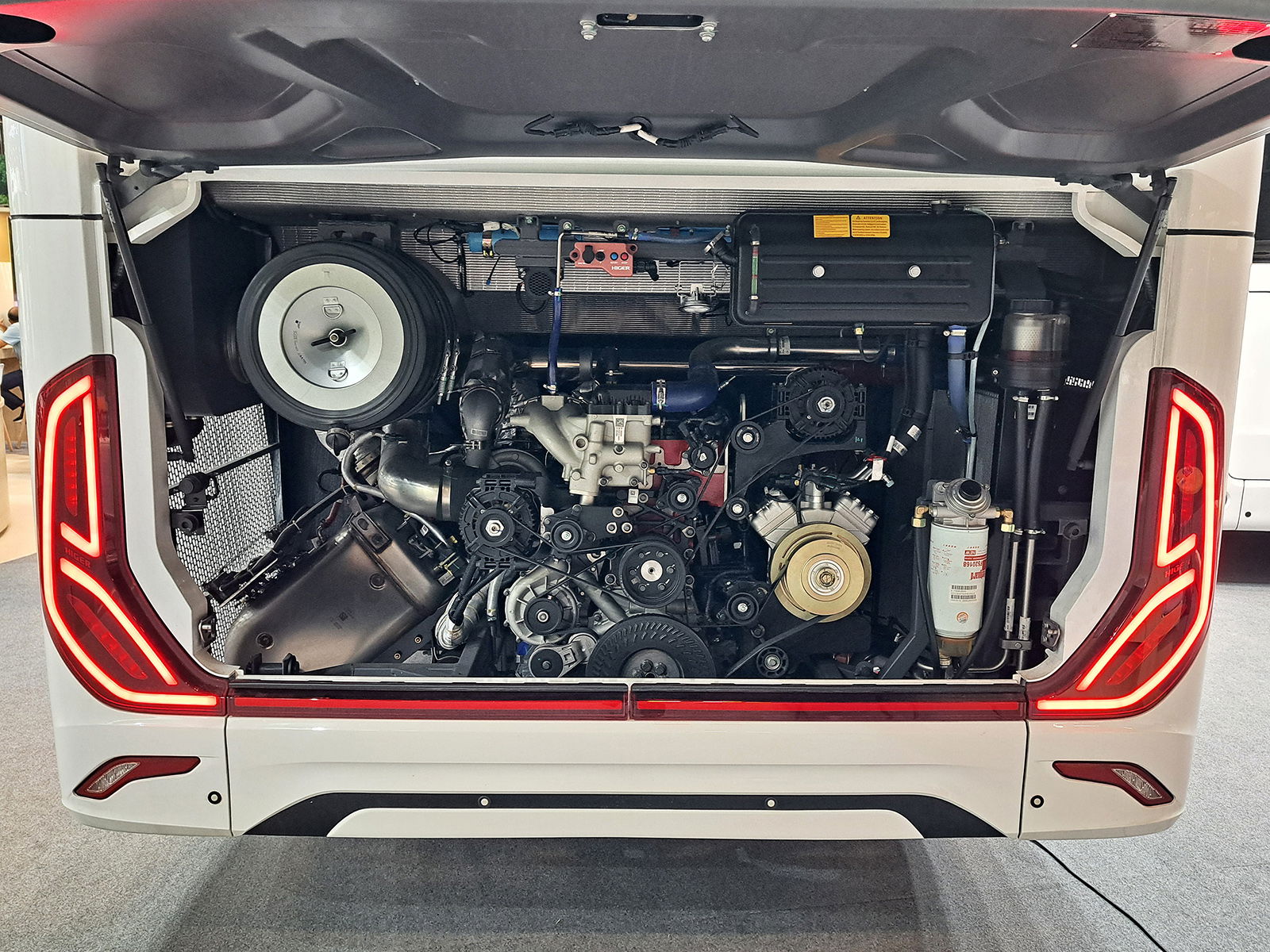
The clear focus of the stand and Higer’s communications was the new V13 coach, with which like other leading Chinese bus manufacturers the company is now competing for the favour of European private operators in the diesel-powered long-distance segment as well. The 13.15-metre-long and 3.85-metre-high model is part of Higer’s new V series, launched in 2024, and is also produced in a fully electric version. Although more than 80% of Higer’s European sales consist of models with alternative drivetrains, the Chinese manufacturer – like some of its European competitors – has recognised that the transition to electric propulsion is progressing more slowly than expected in the long-distance segment, making it worthwhile to continue investing in diesel-powered models for the time being.
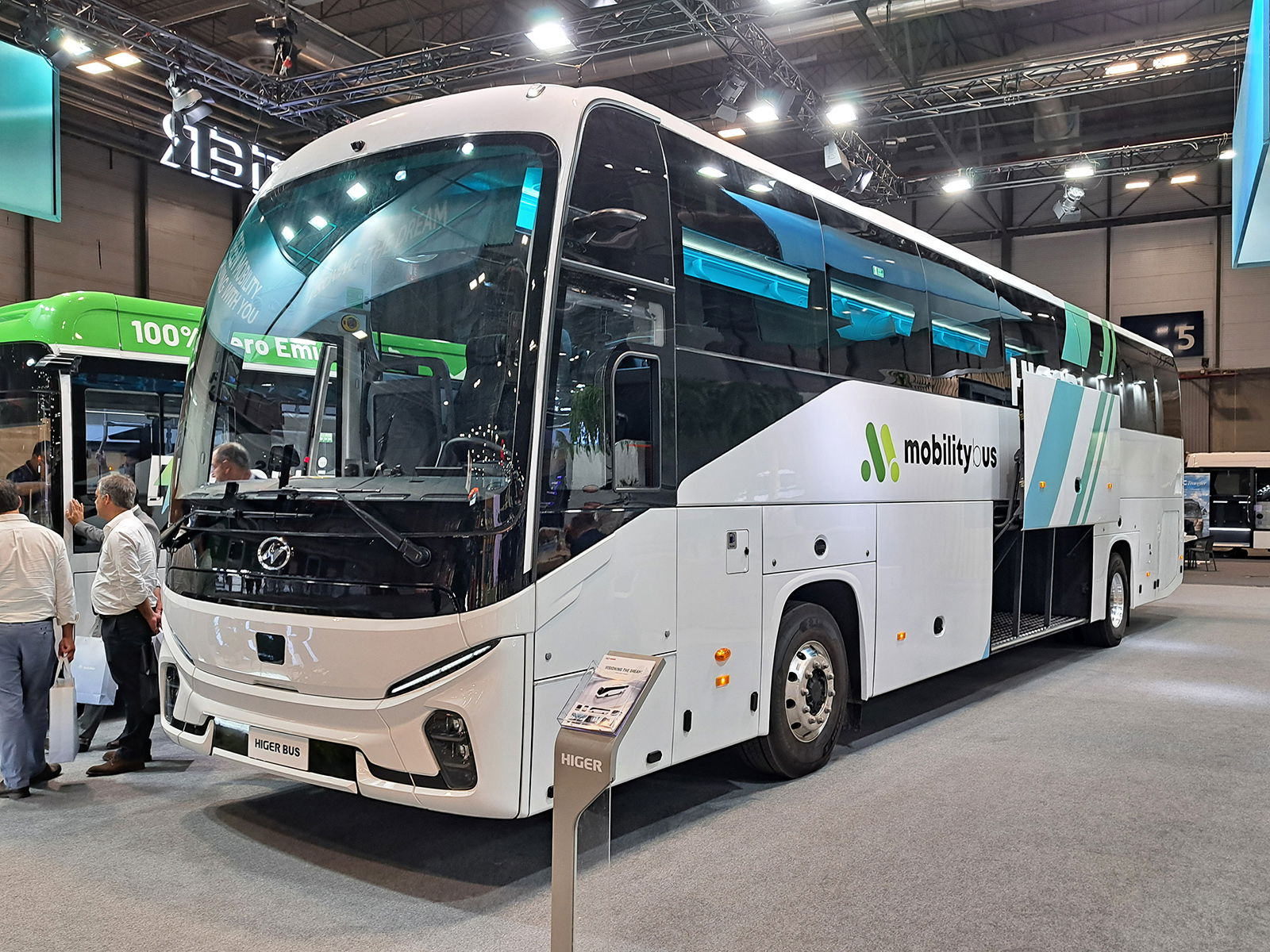
Giving an impression of good build quality at first glance, the interior, which is 2 dB quieter than required by the EU, accommodates 59+1 people. Passengers have 13.5 m³ of luggage space at their disposal, which Higer says is 21.6% more than is customary in the category. A wheelchair lift can also be specified above the front axle. The driver’s area follows the current trend set by Chinese manufacturers, with tablet-like displays serving both as the 10.25-inch central instrument cluster and as the infotainment control interface. The entertainment system and air-conditioning functions can also be controlled by voice. There is so much space in the bus’s engine compartment that it almost echoes; the 490 hp (360 kW) Dongfeng-Cummins ISL power unit is practically lost within it.
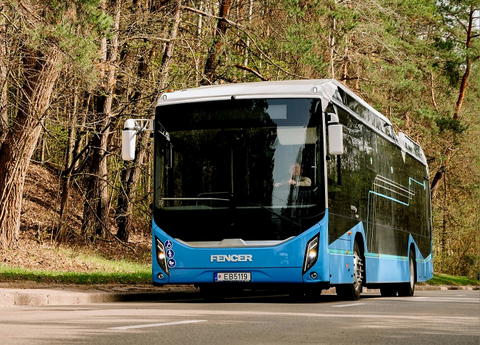
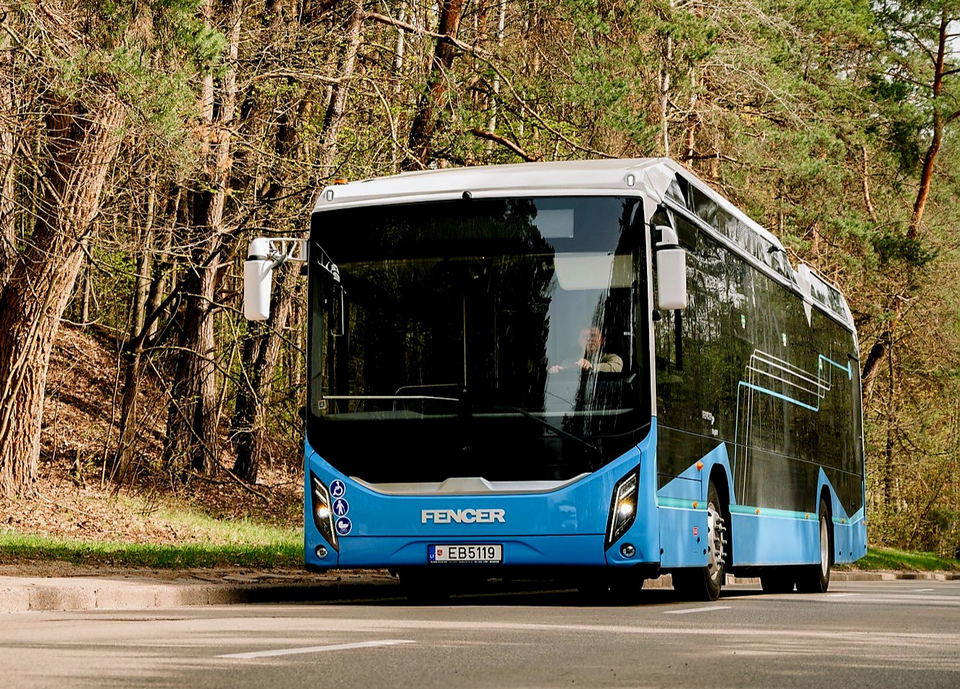
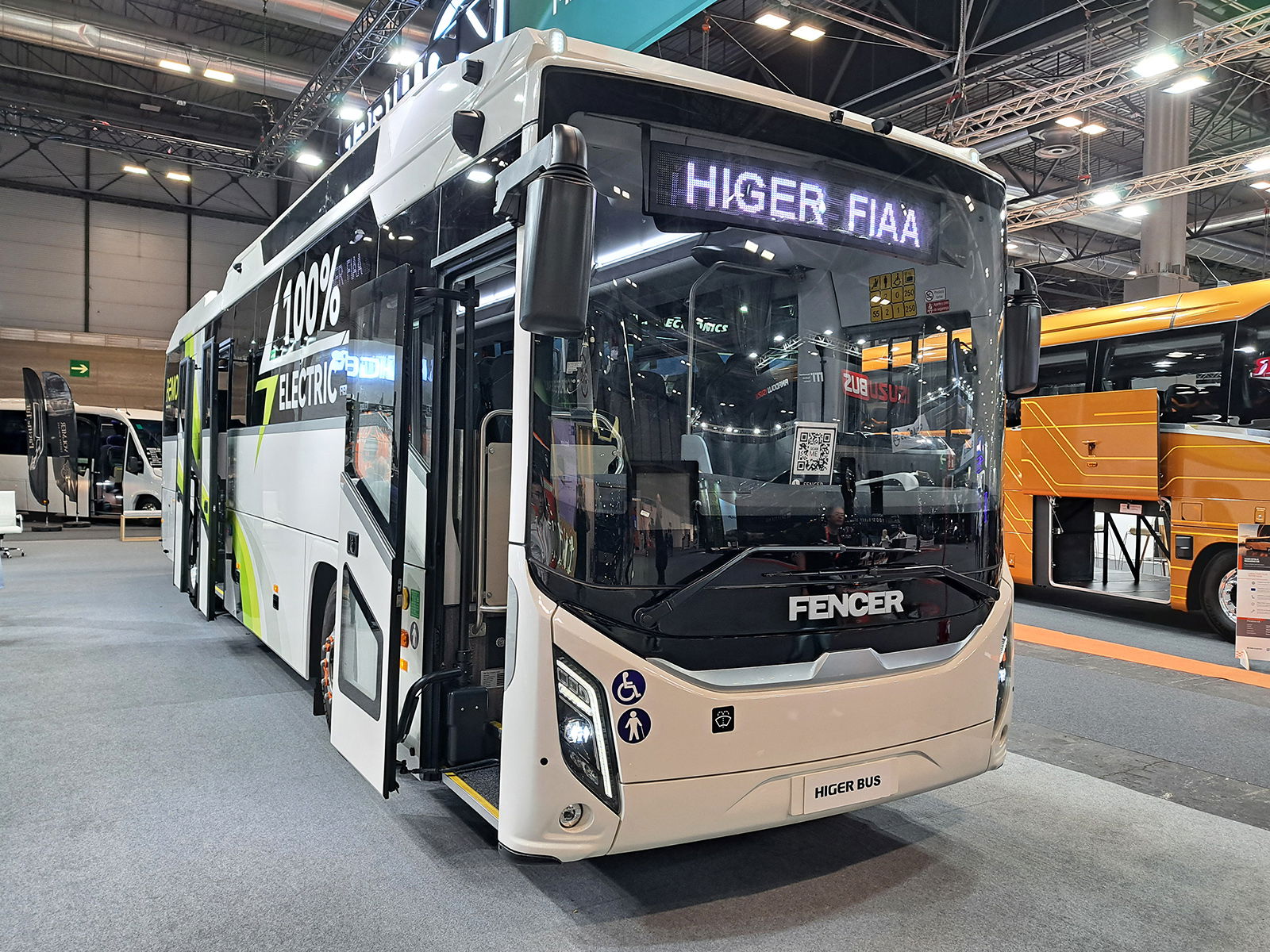
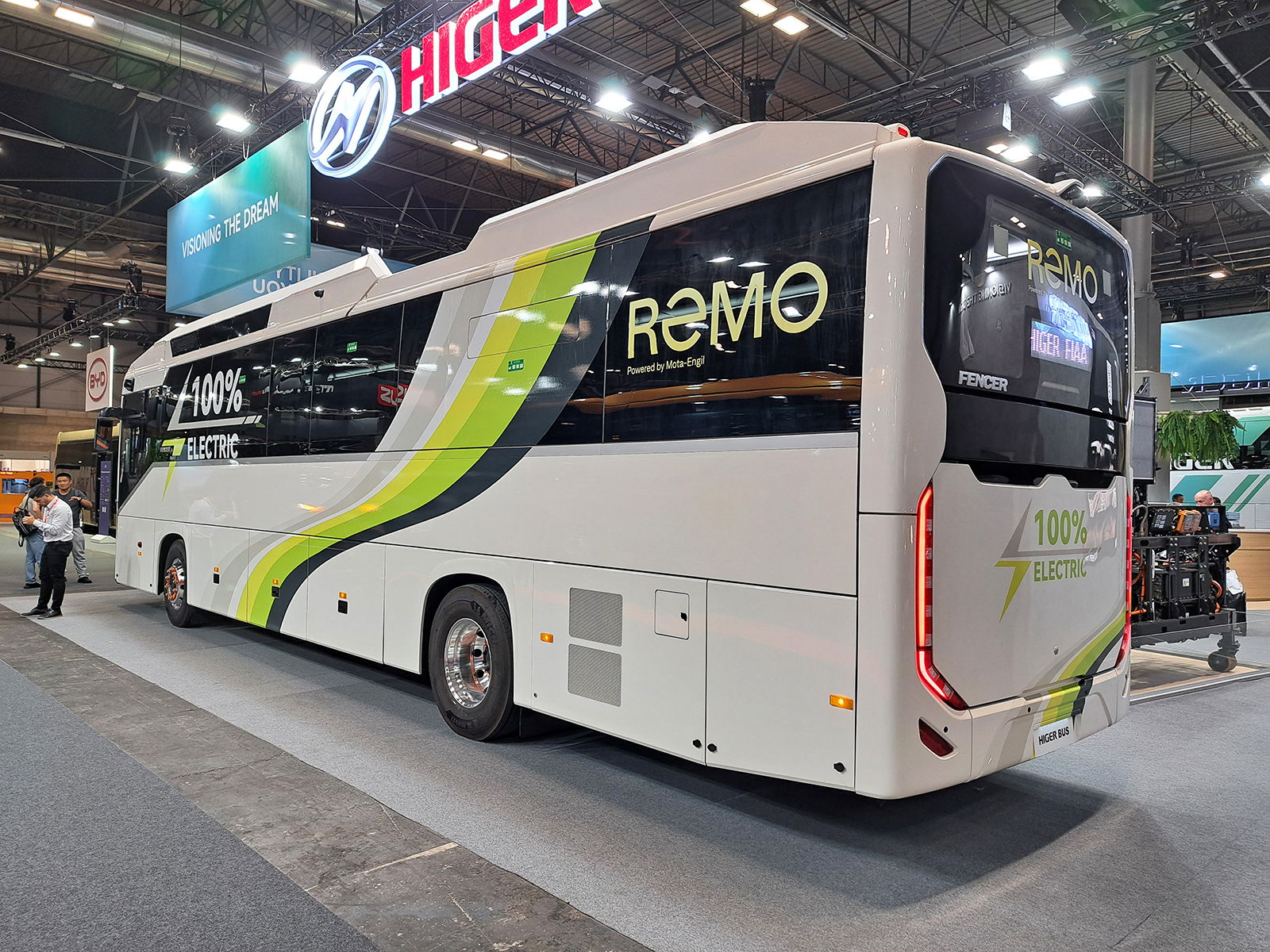
Making its debut as a new addition to the European range was the Fencer f6 Integral EV, adding to the growing ranks of high-floor interurban electric buses. We refer only to a European, rather than a world, premiere because Higer had already introduced a model of the same name and appearance on the Brazilian market in March 2024 and, although the manufacturer’s representatives present at the event were unable to confirm that they are identical, given Higer’s global product policy, there is a strong likelihood that it is indeed the same model. Among its capabilities, the manufacturer highlighted the preconditioning of the batteries and passenger compartment in accordance with German VDV Recommendation 261, as well as the high degree of integration of the high-voltage system, which facilitates maintenance. In its 12.5-metre-long basic version, with a 1-2-0 door layout and equipped with a wheelchair lift, it can be fitted with 59 passenger seats, while the underfloor luggage compartment has a capacity of 5.5 m³. The installed lithium iron phosphate (LFP) traction battery pack can be scaled from 350 to 510 kWh.
Interestingly, at the press conference, alongside the already known f1, f8 and f18 models, the f9 urban double-decker was also mentioned as a member of the Fencer series, despite earlier reports that its development had been discontinued.
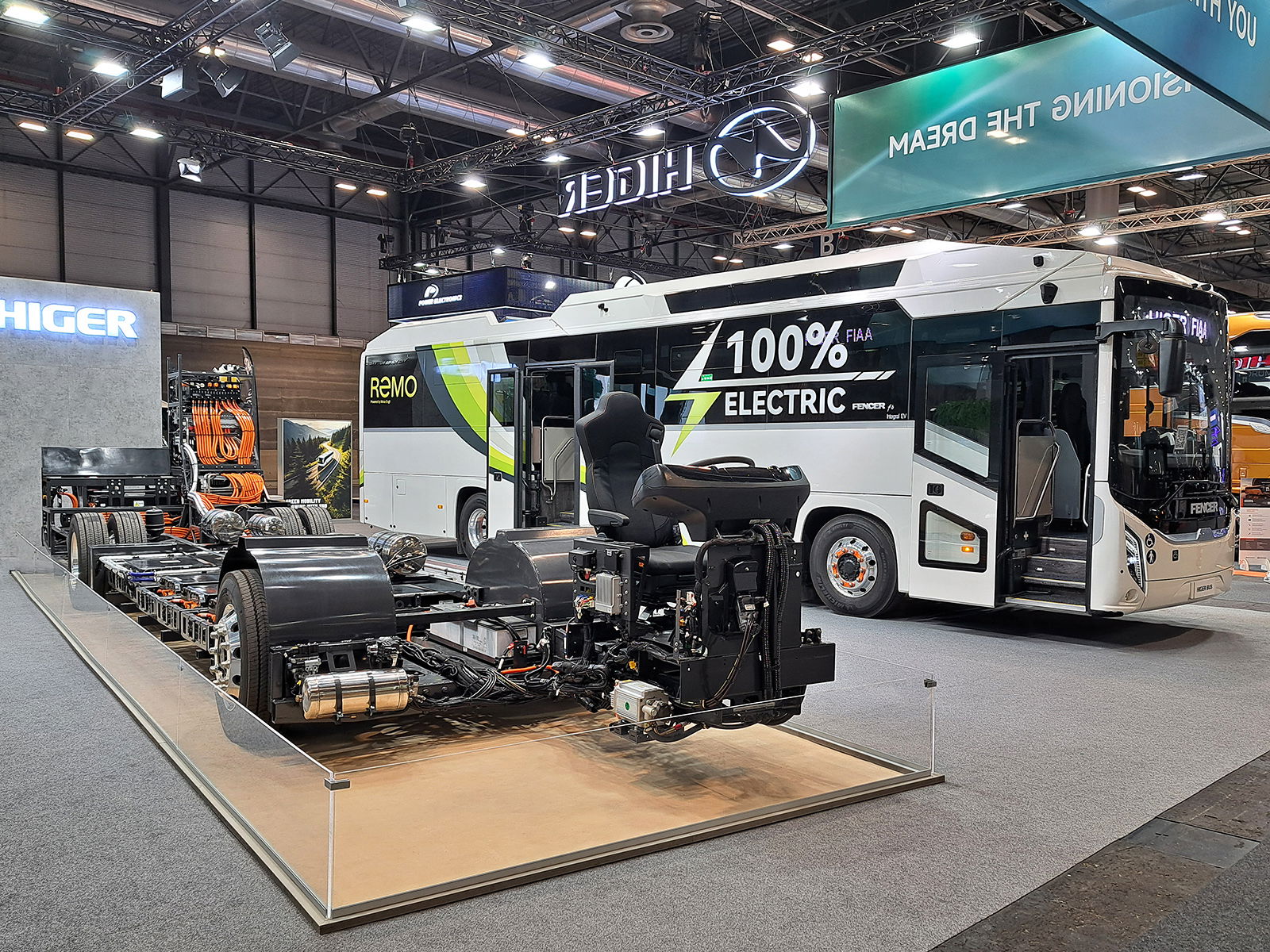
Higer first became known in Europe more than a decade and a half ago as a contract bodybuilder for Scania, but the tables may now turn: the Chinese manufacturer is looking to enter the market as a chassis manufacturer as well. To this end, it also presented in Madrid a proprietary rolling platform suitable for building low-floor urban electric buses, although certain details recall Scania solutions. Its mechanical equipment is identical to that of the marketed in Europe through the Scania network Fencer f1 Integral EV electric bus, so in technical terms, anyone purchasing a bodybuilt vehicle on this basis essentially receives this model.
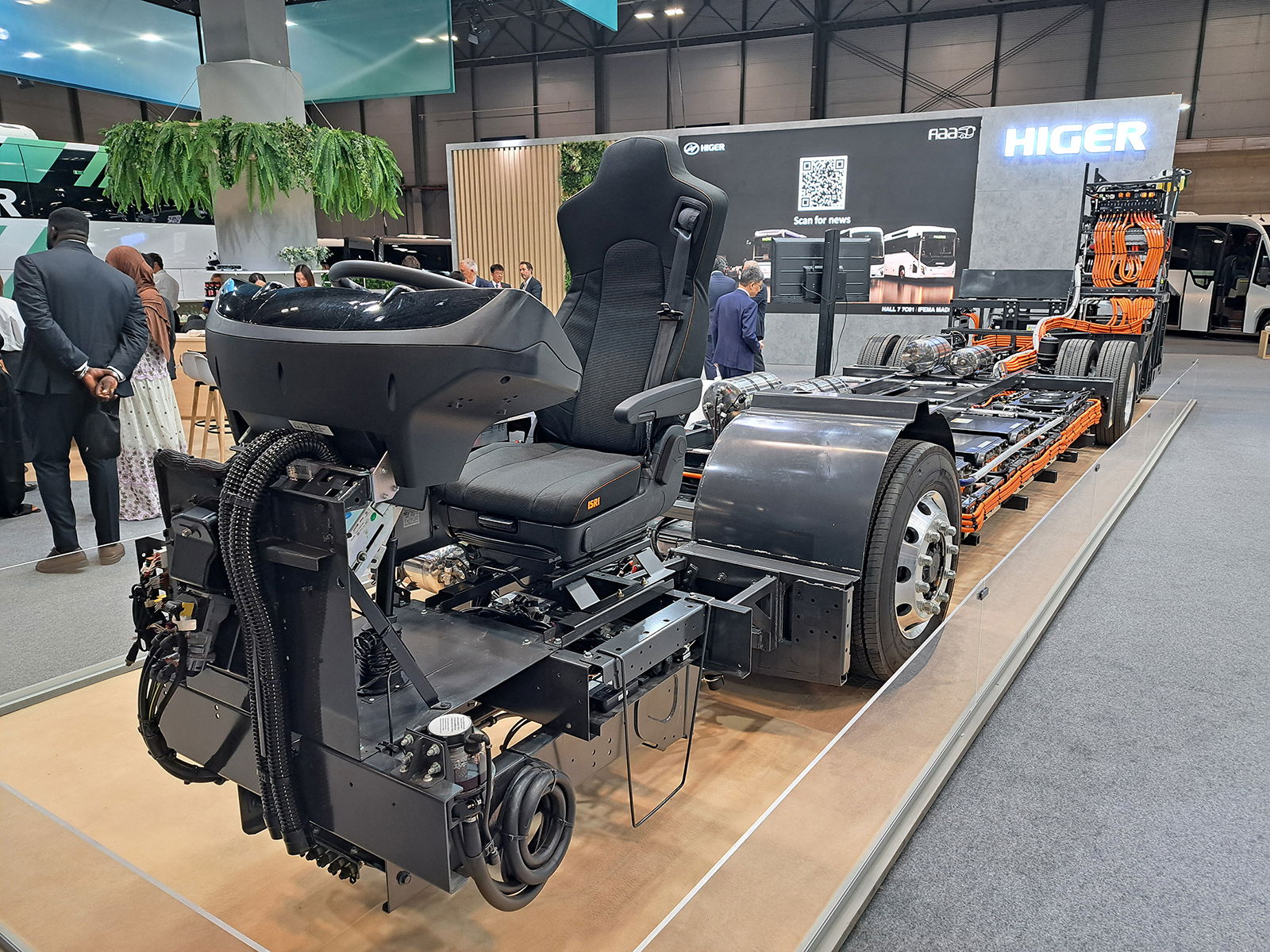
The chassis, which includes the complete drivetrain and advanced driver-assistance systems (ADAS), was exhibited in a drivable delivery configuration, meaning that the positions of the battery modules and the CCS Combo 2-standard charging sockets (two of the latter are provided) are not final and can be varied relatively freely by prospective bodybuilders. The LFP traction battery pack supplied by CATL has a total capacity of 440.49 kWh, and the system supports rapid charging at up to 360 kW, although the engine-tower layout is now considered outdated. The proprietary 5-in-1/6-in-1 high-voltage controller promises lower weight and energy consumption while maintaining reliable operation. The front axle has independent suspension, while the driver’s area also complies with German VDV 234 requirements. Thanks to electrophoretic dip surface treatment supplemented by further coating, the chassis will remain corrosion-free for 20 years. According to Higer, the platform underwent a 500,000-kilometre test run before series production began, conducted at temperatures between -16 and +37 °C.
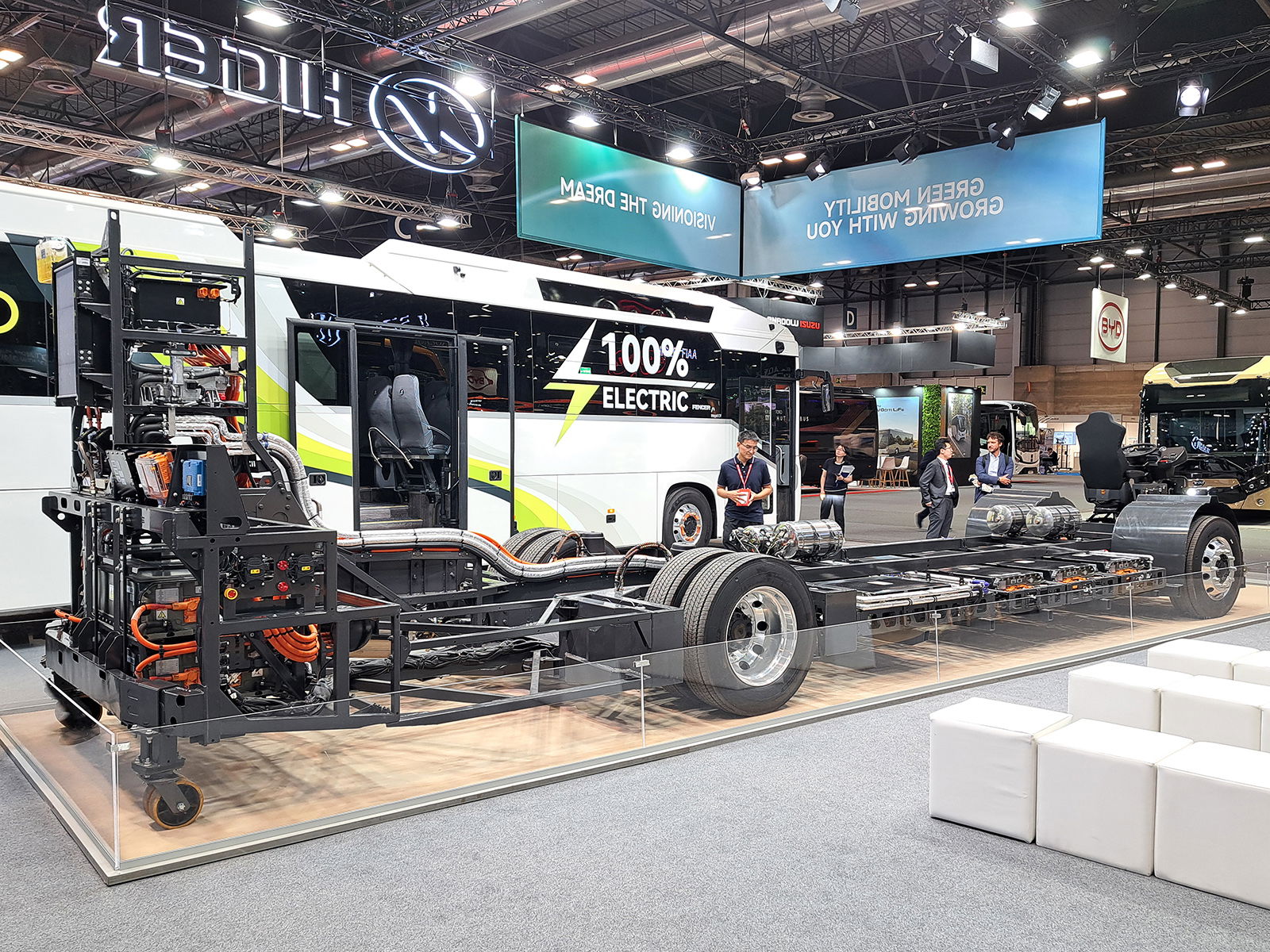
In response to our question, Higer representatives said that they are fully open to European production as well. According to them, local assembly of Higer buses from KD kits supplied by the manufacturer is already under way in a number of countries, and a similar arrangement would also enable them to meet the European Union’s local-production requirements, which are expected to become stricter in the future.