FIAA 2026: Irizar’s interurban electric bus family is now complete
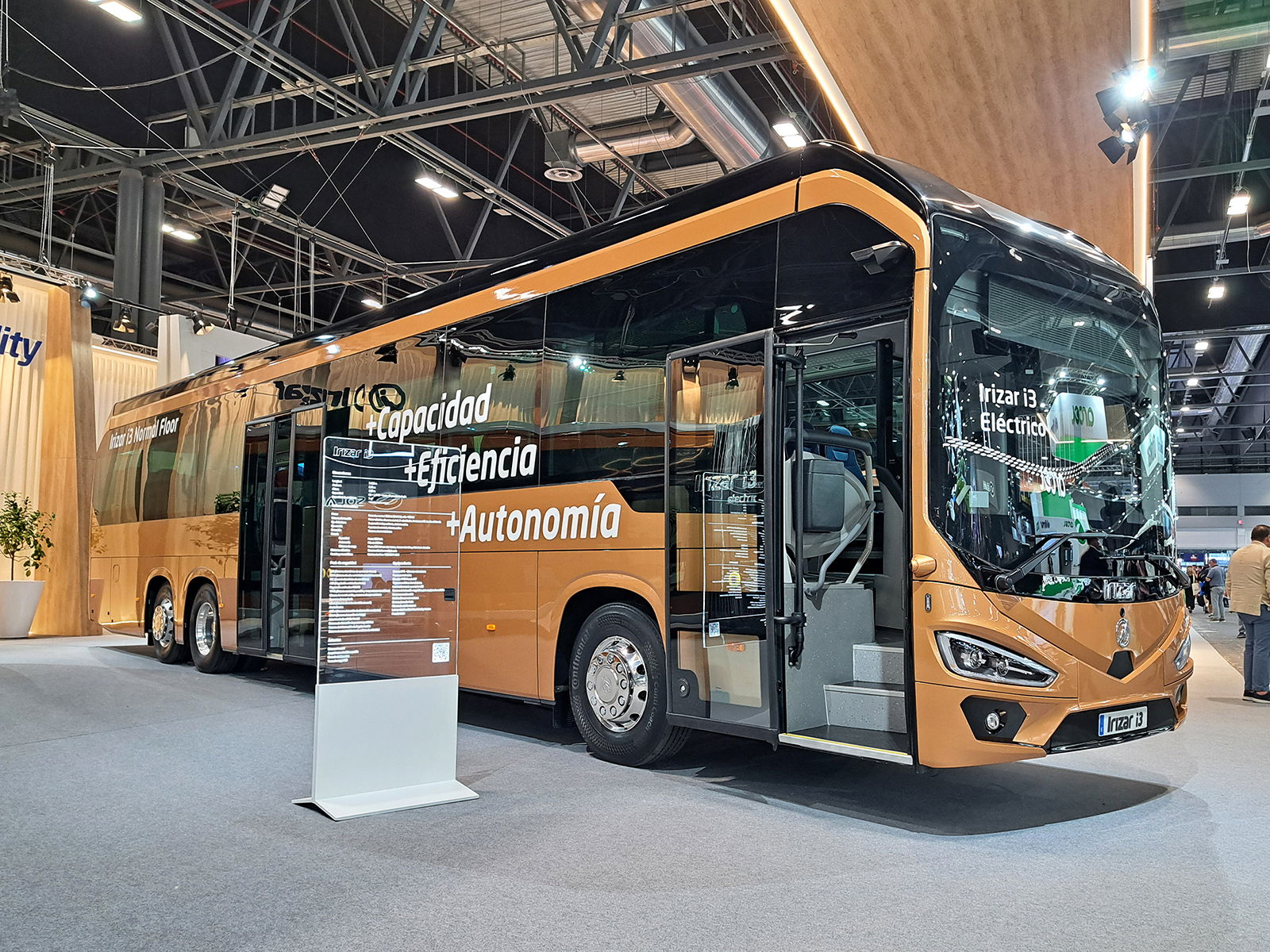
Irizar unveiled its latest development on home ground, choosing the FIAA 2026 exhibition in Madrid, held between 22 and 24 September, for the world premiere of the tri-axle integral version of its normal-floor i3 Electric interurban bus. In addition, three further bus models awaited visitors on the Basque manufacturer’s stand, renowned for its sophisticated vehicles, including another zero-emission newcomer also launched this year.
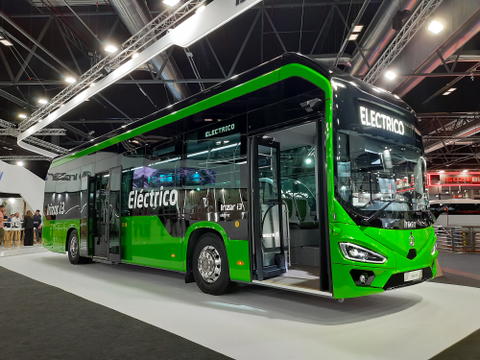
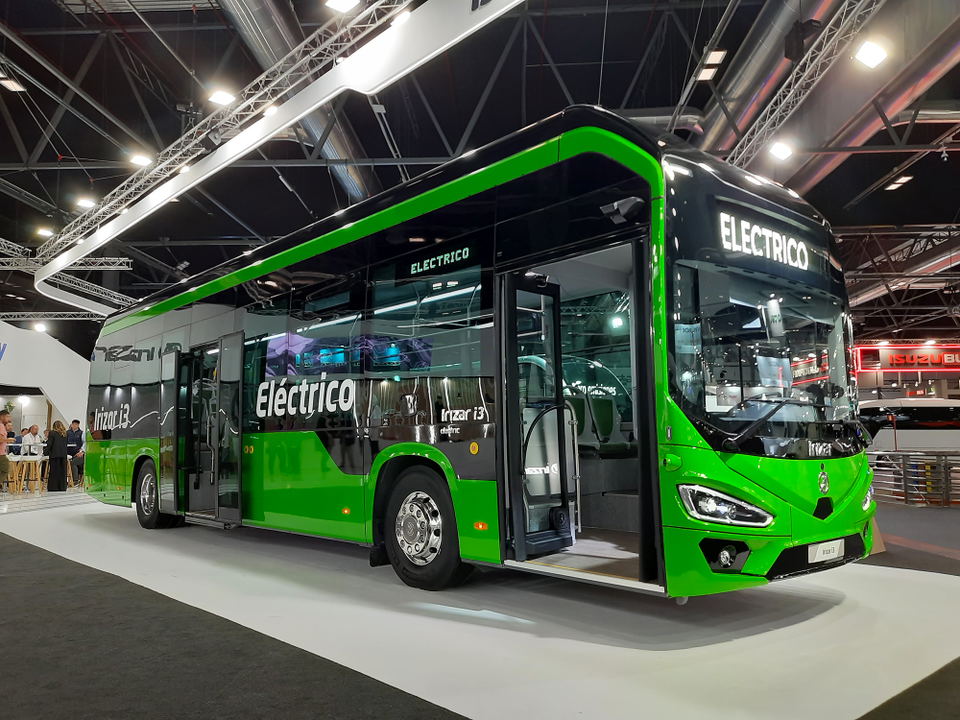
The first member of Irizar’s all-electric interurban range, the low-entry two-axle version of the i3 Electric low-entry two-axle version made its debut at this very event two years ago. The product line has expanded continuously since then: since last year, a normal-floor two-axle and a low-entry tri-axle version have also been included in the range, and now the normal-floor tri-axle variant has arrived as its fourth member. At 14.99 metres long, pushing the limits of European dimensions, this is the longest Irizar i3 to date and is intended primarily for scheduled interurban services with high passenger volumes. Although only the integral version, marketed under the Integral suffix in the manufacturer’s nomenclature, could be viewed in Madrid, the model will also be available on the mechanical platforms of various chassis manufacturers, in keeping with Irizar's tradition.
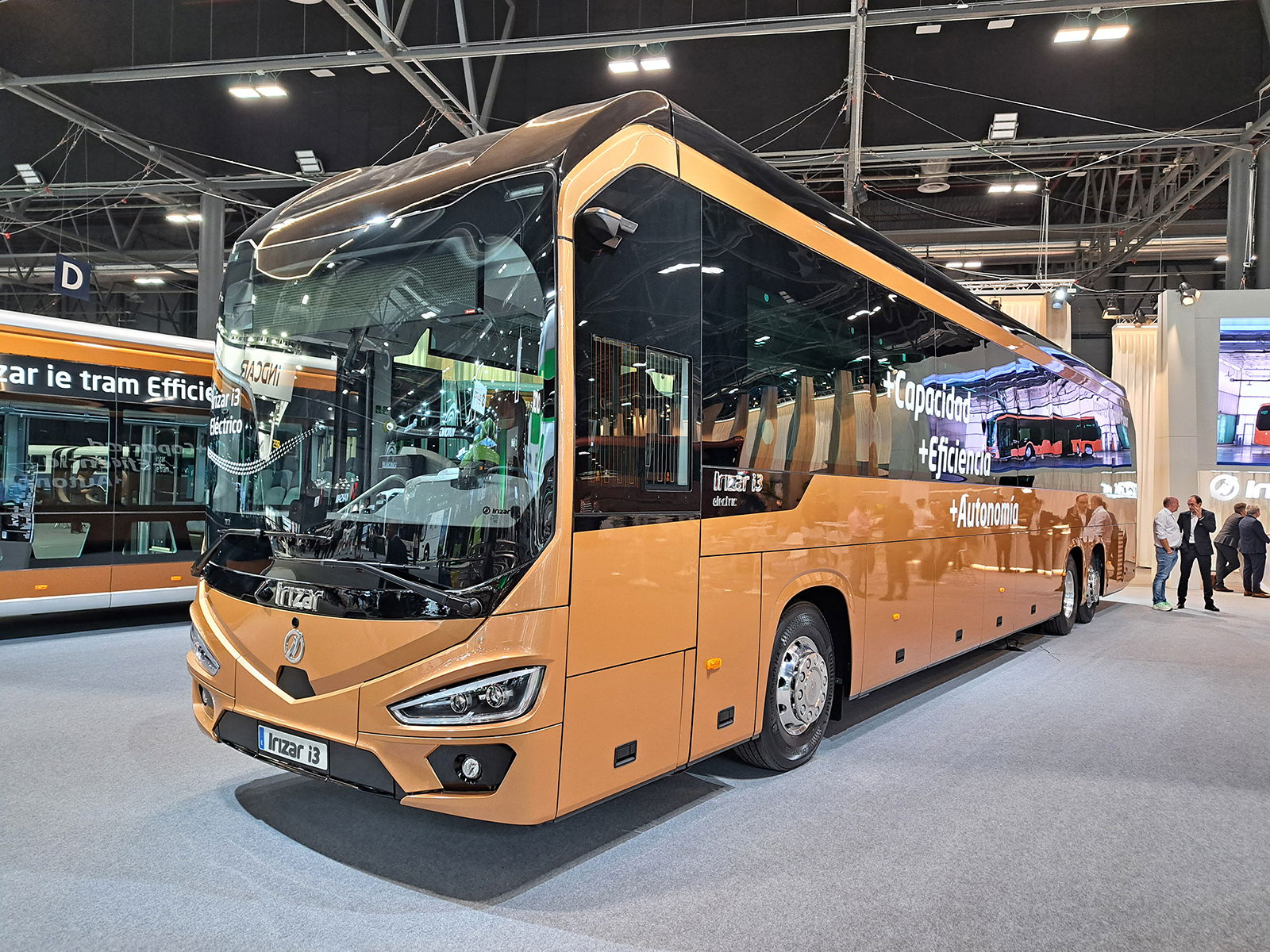
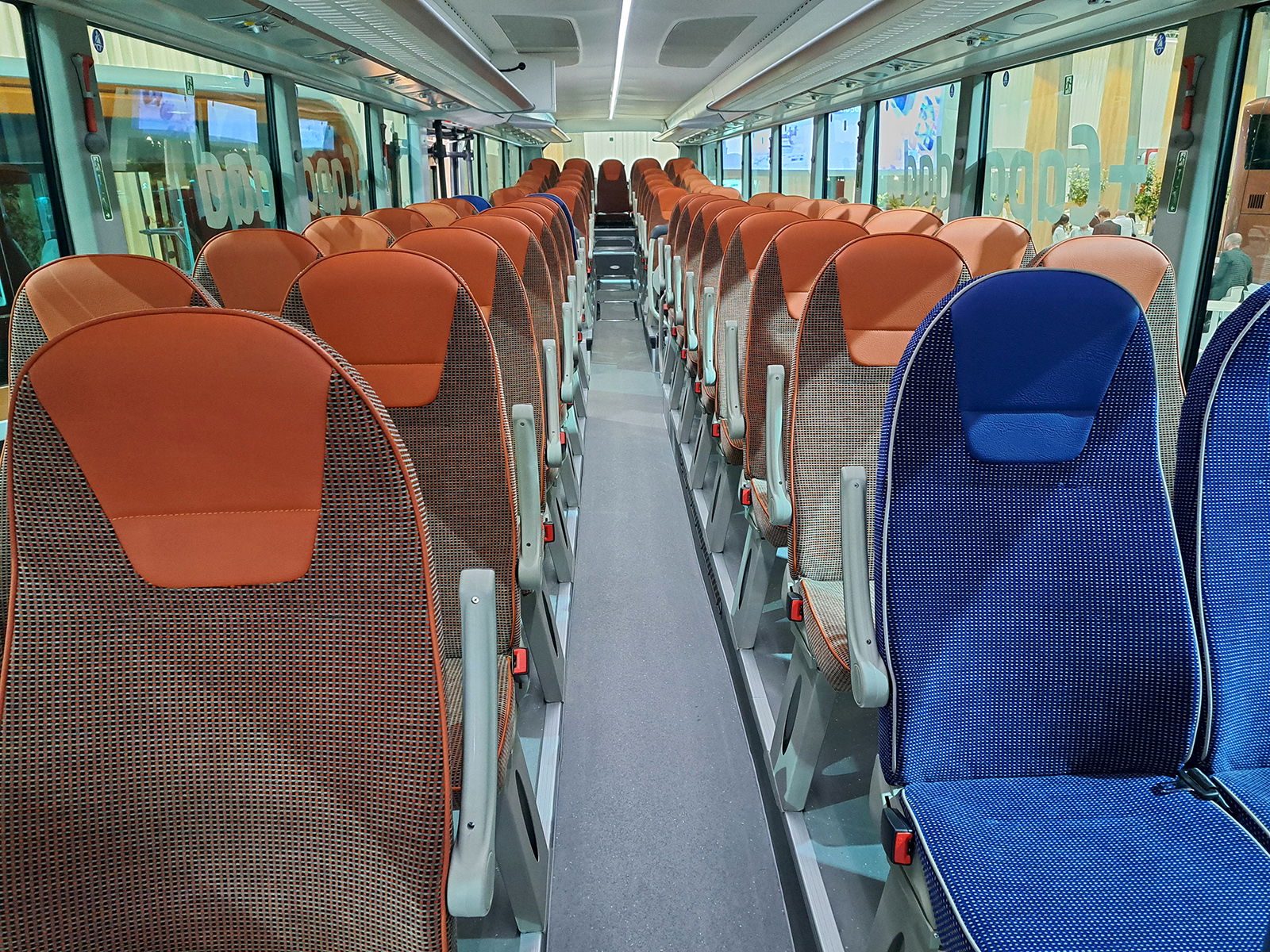
The elegantly finished pastel-yellow display vehicle has 65 lightweight Inova i4 (Optima 4360NG) interurban passenger seats with two-point seat belts, 40 standing places and one wheelchair space, although the model can also be fitted with up to 69 seats. A Masats KS7 wheelchair lift, made by another Irizar Group company, has been installed at the step of the double-leaf second passenger door. The passenger compartment appears somewhat austere to eyes accustomed to Irizar’s premium coaches, chiefly because of the relatively simply designed luggage racks and the centrally positioned lighting, but it compares well with its direct market rivals – indeed, individual air vents and reading lights, along with two LCD monitors in the passenger saloon, are far from standard in this category. The raised platforms leading to the seating area are relatively high, but in return the sense of space is excellent: official figures put the interior height in the aisle at 2,600 mm.
The bus is powered by a central synchronous electric motor producing 380 kW of nominal output and 400 kW at peak, integrated with a three-speed gearbox. Energy is supplied by the 528 kWh lithium-ion traction battery pack familiar from the two-axle version, giving the bus a range of more than 500 kilometres according to the manufacturer. We learned at the venue that the position of the battery modules varies depending on the particular market – and permitted axle loads – but, according to company representatives, no energy storage units are installed in the luggage compartment. This also helps the normal-floor tri-axle i3 Electric to accommodate a total of 7 m3 of luggage, including the overhead racks. Charging speed is another critical issue for interurban electric buses: Irizar’s newcomer sits in the middle of the pack in this respect, as the 225 kW available via two charging connectors is now only sufficient for that. The CCS Combo 2-standard charging sockets are located at the front and rear on the right-hand side of the body.
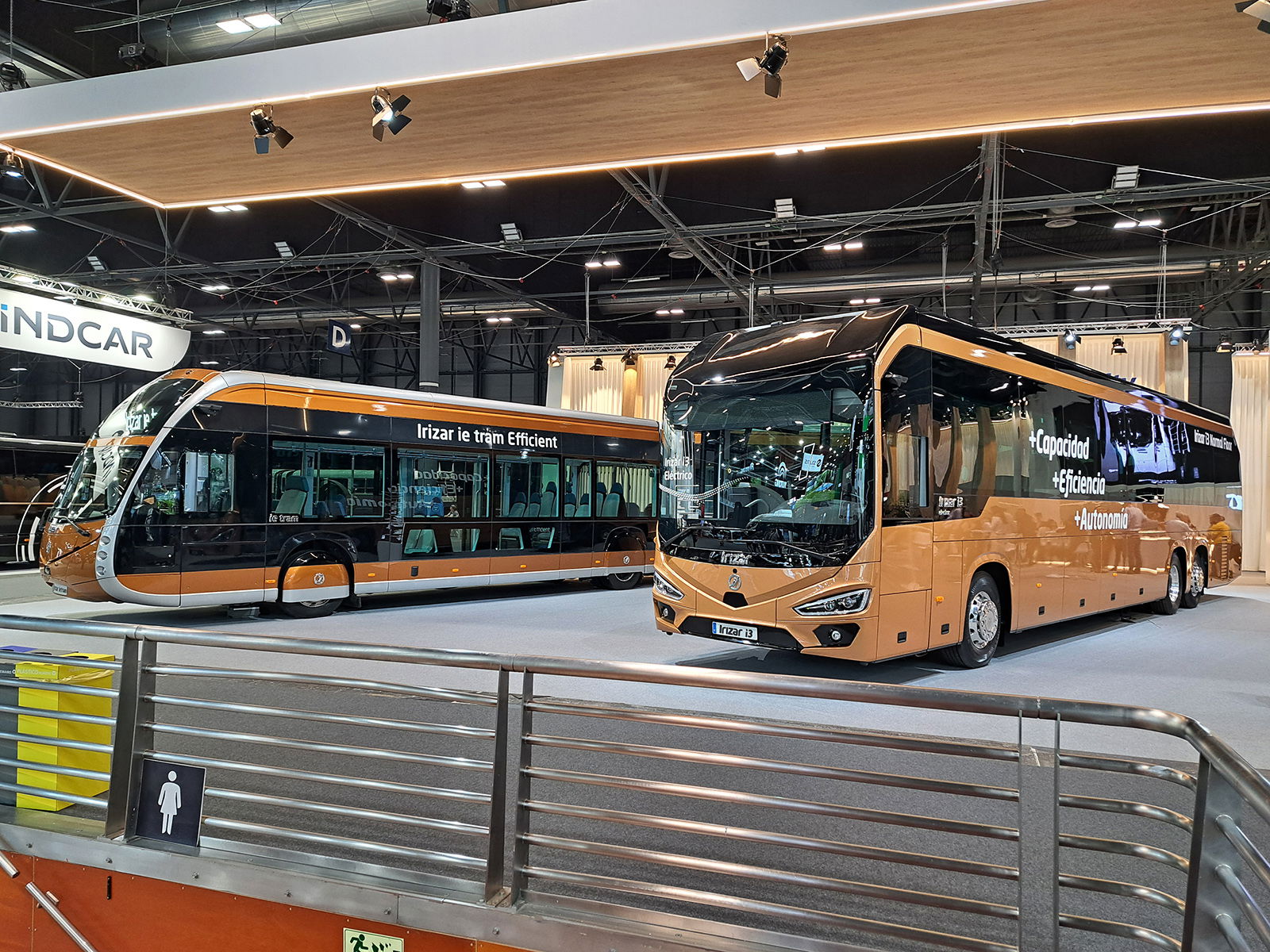
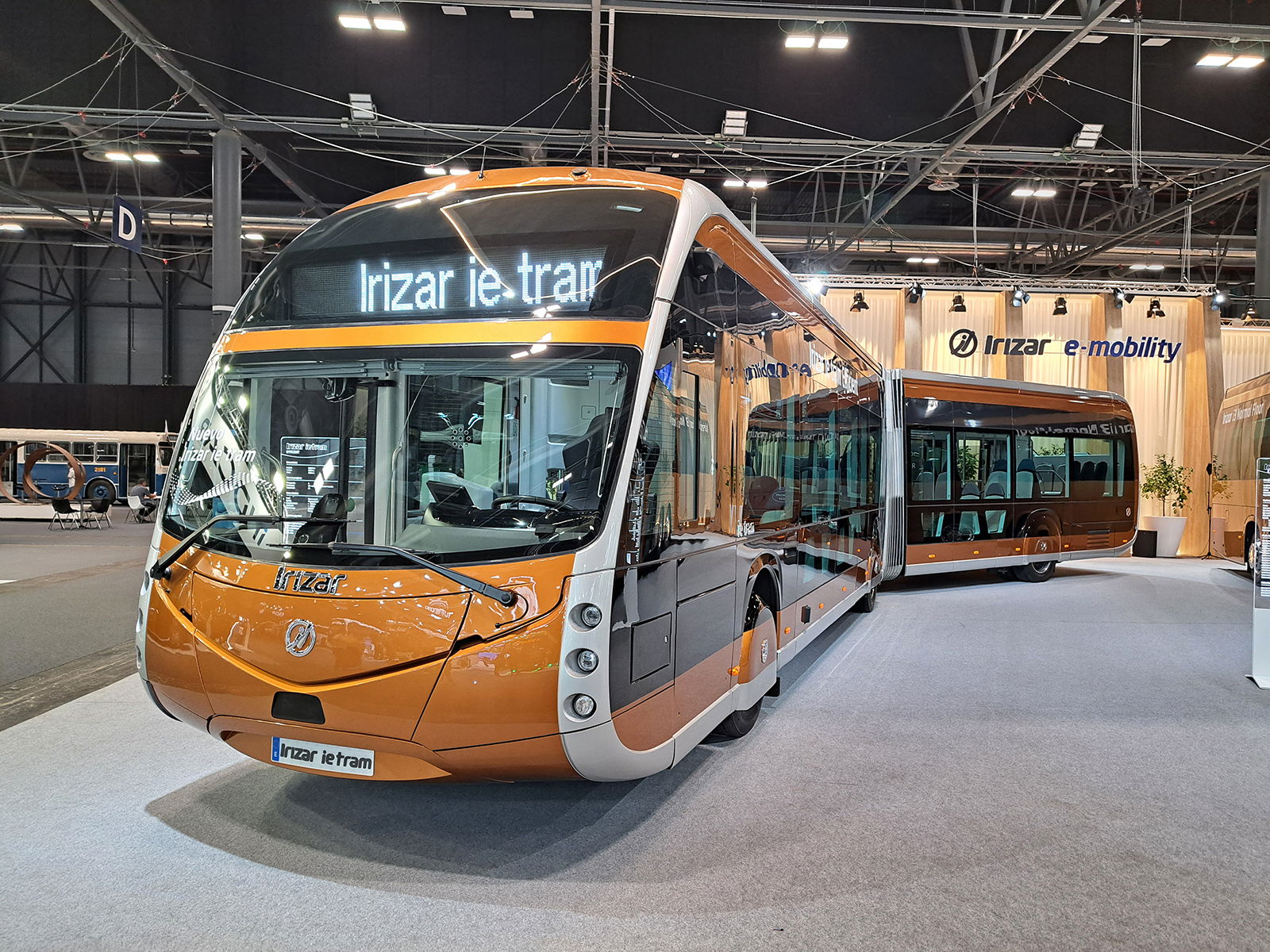
The stand’s other zero-emission attraction was the articulated ie tram Efficient electric bus designed for BRT routes, which Irizar displayed in a tasteful hazelnut brown, continuing the yellowish-brown colour scheme. Although the styling of this model, inspired by modern trams, will be ten years old next year, its appearance remains futuristic even today, so it is no coincidence that, apart from the widened windscreen, it was virtually untouched in the most recent redesign. The Efficient variant, comprehensively upgraded beneath the panels, debuted in June this year at the MOBCO 2026 exhibition in Paris; our detailed presentation of it can be read by clicking here. The latest version, equipped with Irizar’s fourth-generation batteries offering more than 700 kWh of total capacity and a range exceeding 400 kilometres, features, among other things, a new climate-control system, 10% lower energy consumption than its predecessor, and simpler maintenance. The energy storage units are charged as standard through a CCS Combo 2 plug-in connector, although pantograph fast charging is also available as an option.
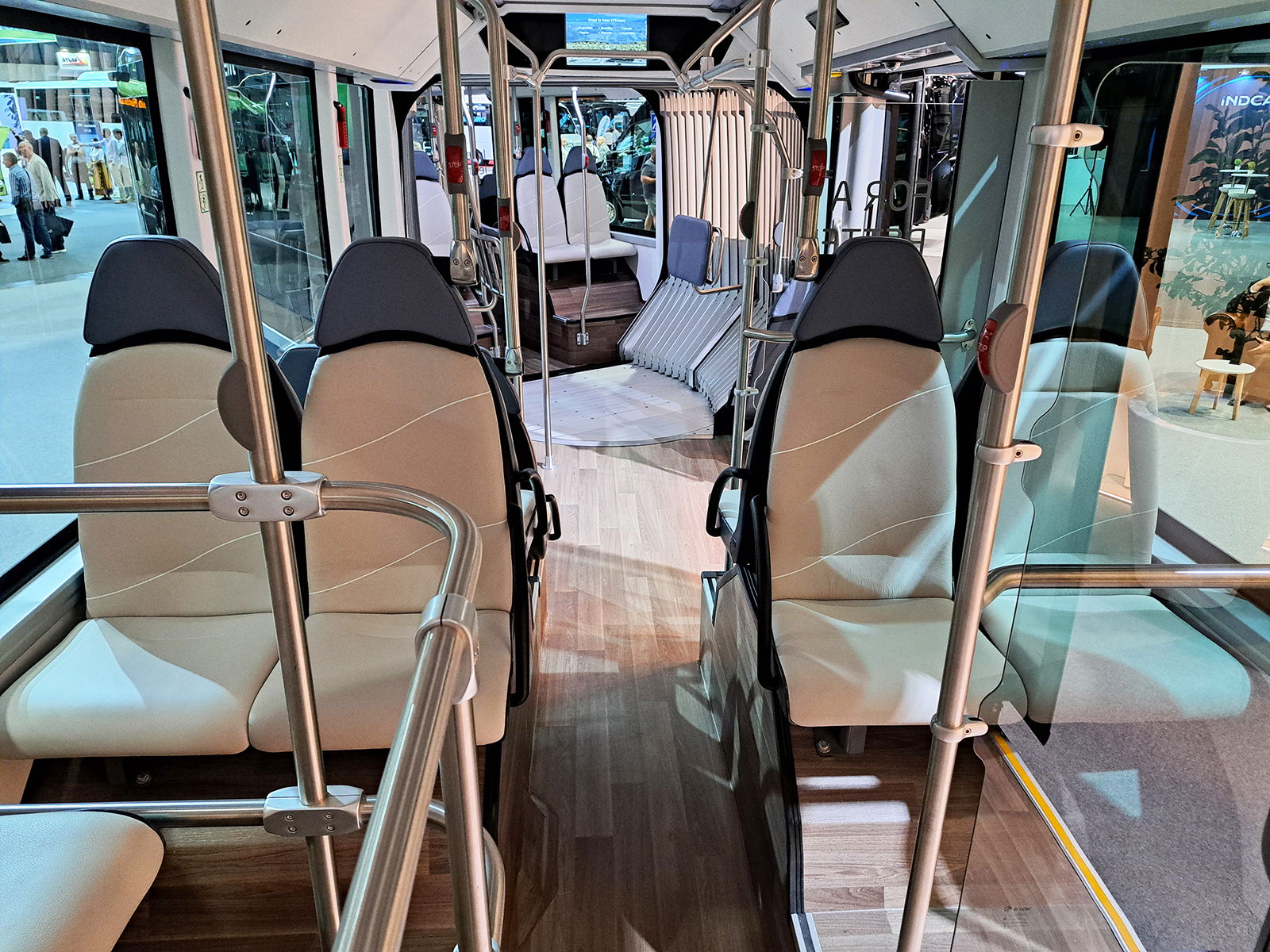
Stepping aboard the fully low-floor interior, with 36+4 seats and space for 89 standing passengers, we could see that Irizar still regards bus manufacturing as something of an art form: the passenger compartment’s layout, choice of materials, lighting conditions and ease of passage through the articulation remain benchmarks among city buses today. The single-leaf front passenger door and the rear-most row containing only four seats may be mentioned as compromise solutions.
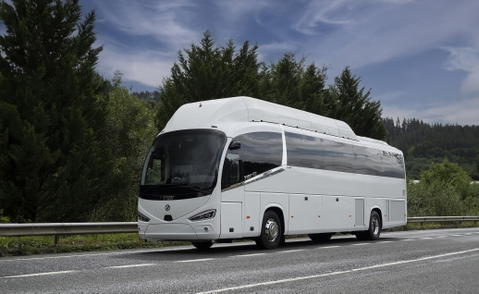
Alongside the electric models, the stand also featured two iconic members of Irizar’s coach range, the i6S Efficient and the flagship i8, both displayed by the manufacturer in integral form. The former was represented by a 12.92-metre-long, two-axle example standing 3.93 metres high including the roof-mounted air-conditioning unit. Passengers in the 55+1+1-seat display coach, powered by a 449 hp (330 kW) DAF MX-11L 330 E6-E diesel engine and a 12-speed ZF TraXon automated transmission, have 13.59 m3 of luggage space at their disposal. Their comfort is ensured, among other features, by a Hispacold air-conditioning system, double-glazed heat-insulating side windows, a toilet, a multimedia system complemented by two interior monitors, and 220 V and USB charging points, while their safety is safeguarded not only by three-point seat belts and a body complying with the UNECE R66.02 rollover protection regulation, but also by an active-safety arsenal comprising more than a dozen advanced driver assistance systems.
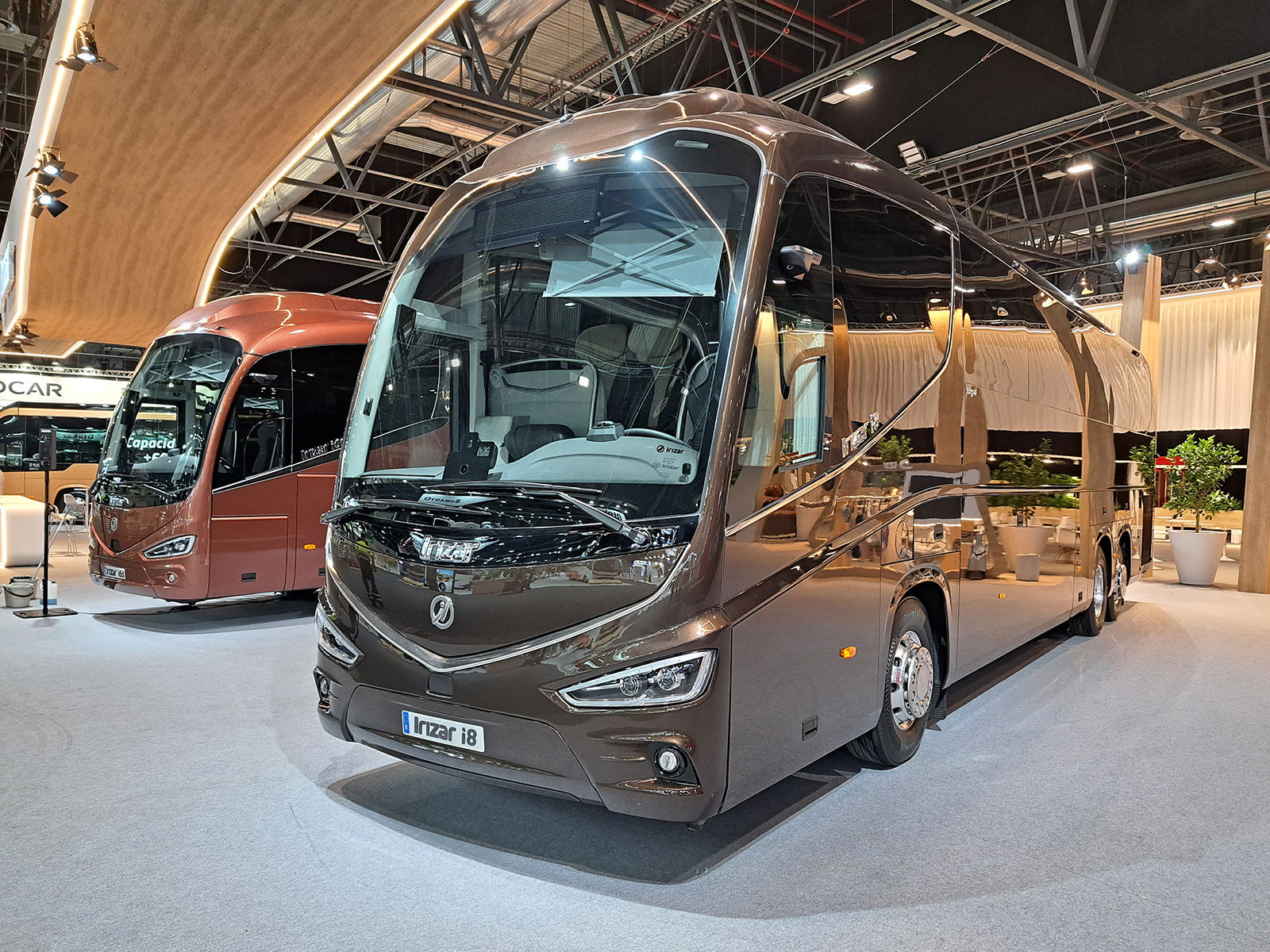
The i8 luxury coach offers its passengers even greater comfort. Irizar brought along a 13.22-metre tri-axle version (the model is produced exclusively with a 3,980 mm-high body, and both its luggage compartment and fuel tank are more capacious than those of its sibling one rung lower in the manufacturer’s hierarchy). The finish and equipment of the lavishly specified display vehicle’s passenger compartment are simply sumptuous; the passenger seats with adjustable headrests are comfortable even on long journeys, and with only 51 of them on board in this case, generous legroom is also assured. The 530 hp (390 kW) DAF MX-13 390 E6-E diesel engine likewise represents the most powerful option available for the model, while the torque produced by the powerplant is transmitted to the driven wheels by a ZF TraXon automated gearbox in this coach too.