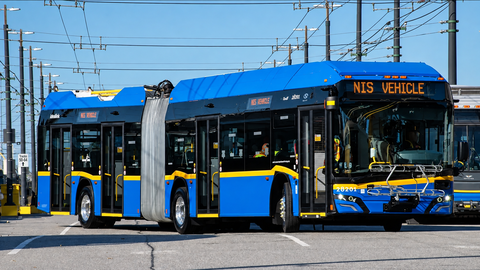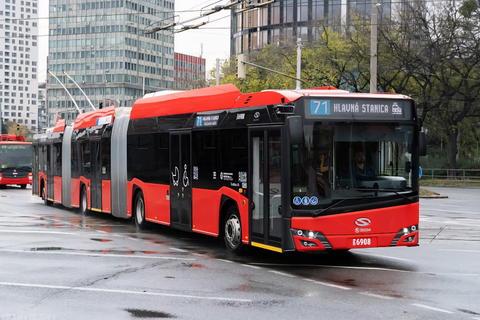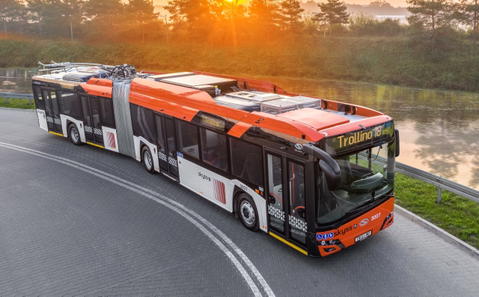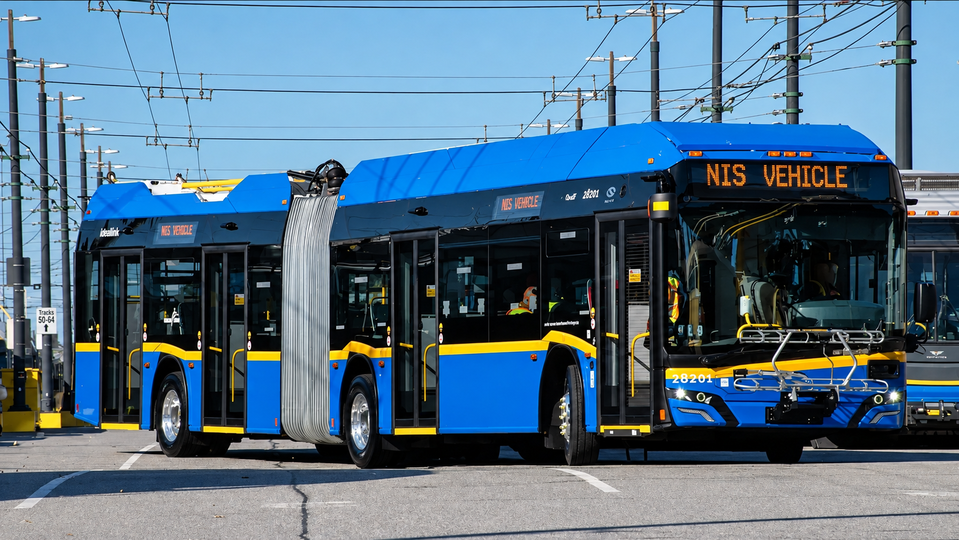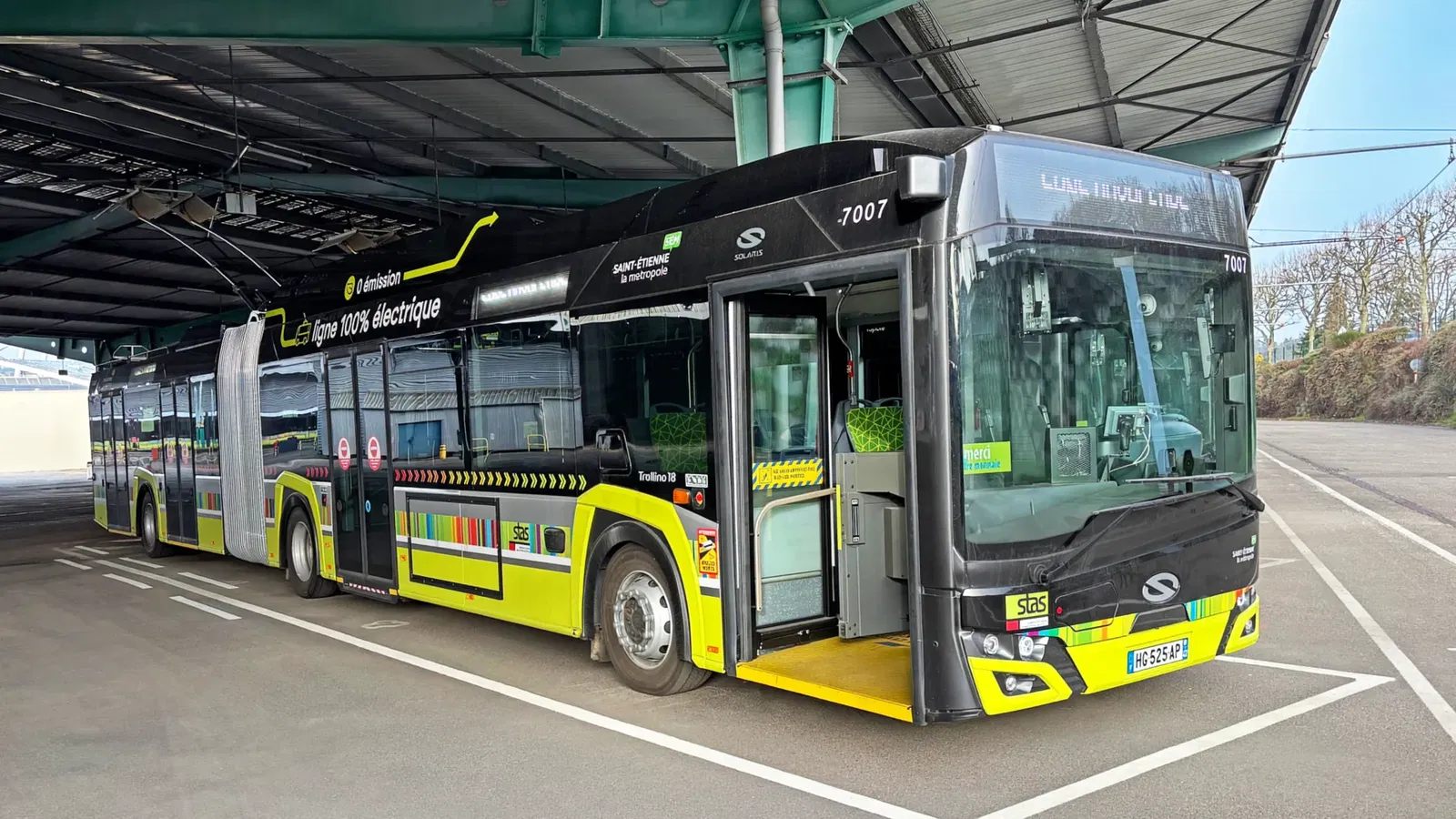
Saint-Étienne orders another ten articulated Solaris trolleybuses, with further network expansion also planned
The development of the trolleybus network in Saint-Étienne, France, is continuing: the city has signed a contract with the Polish manufacturer for the procurement of another ten Solaris Trollino 18 articulated trolleybuses, with the assistance of the French public transport purchasing centre, the Centrale d’Achat de Transport Public (CATP). Delivery of the vehicles is planned by the end of 2027, increasing the number of Solaris trolleybuses operating in the city to 41. The procurement is linked to a comprehensive network development programme which, alongside the modernisation of route M6, also includes the conversion of line M4 to trolleybus operation.
The latest order marks another milestone in a partnership that began in 2019. Between 2019 and 2021, Solaris delivered a total of 23 12-metre Trollino trolleybuses to Saint-Étienne, enabling the revival of the trolleybus network, which had previously been significantly curtailed. Thanks to IMC technology, which also permits battery-powered operation, the new vehicles not only made it possible to reinforce route M3, but also to restore trolleybus operation on M7, which had been discontinued in the 2000s. On the latter line, in addition to the partial refurbishment of the overhead line infrastructure, the trolleybuses operate under the wires for around 60% of the route and on battery power for the remaining 40%, eliminating the need to rebuild the entire overhead line network.
The next major milestone in the network’s development was the return of articulated trolleybuses. In 2025, Solaris delivered eight Trollino 18 vehicles to Saint-Étienne, which entered service on route M6 in spring 2026. This saw articulated trolleybuses return to the city’s streets after an absence of almost a quarter of a century. Previously, ten Renault PER 180H vehicles had operated on this route; they were withdrawn from service in the early 2000s and subsequently sold to Tula, Russia.
The newly ordered 18-metre vehicles will be powered by a 250 kW traction motor. Like the eight vehicles delivered previously, the trolleybuses will also be fitted with onboard batteries, enabling them to operate on sections without overhead wires. This is particularly important for the city, where network development is partly based on battery-powered operation, allowing trolleybus services to be extended to areas where installing a full overhead line infrastructure would not be justified.
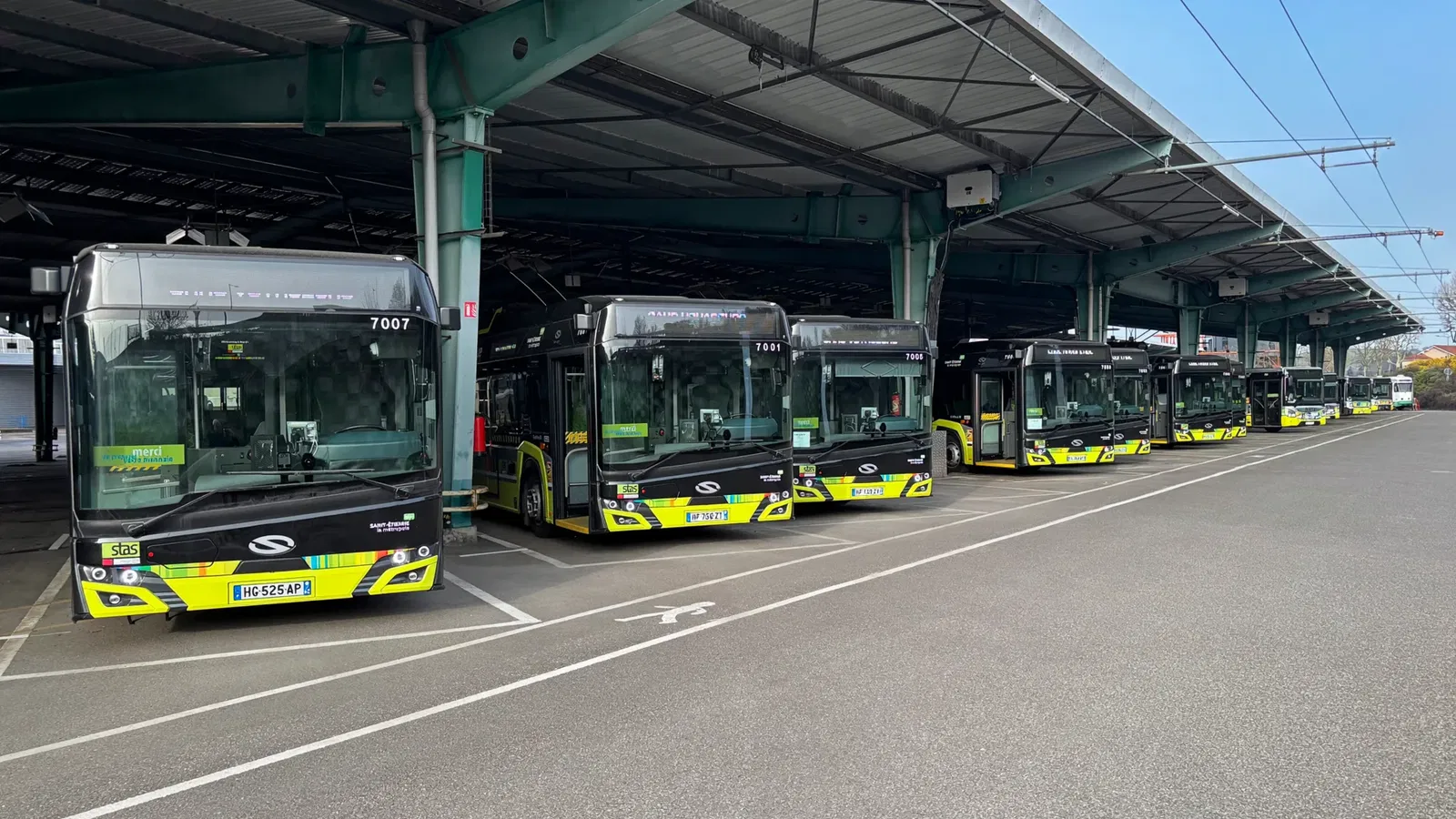
In the driver’s cab, conventional exterior rear-view mirrors will be replaced by a digital camera system. Safety equipment will include a system capable of detecting driver fatigue and inattention, an intelligent speed assistance system, a lane-change support function, and a system for detecting pedestrians and cyclists. Fleet management and maintenance tasks will be supported by Solaris’s eSConnect remote diagnostics system, which enables the remote monitoring of the vehicles’ technical condition.
The procurement forms part of Saint-Étienne’s longer-term transport development programme, one of whose central elements is the conversion of route M6 into the M6+ high-quality rapid service (BHNS – Bus à Haut Niveau de Service). As part of the development, the line will be progressively extended, while the quality of service will be improved through dedicated bus lanes, traffic-light priority and modern stops. The full route, approximately 8.7 kilometres long and linking the IUT Métare area with the Roch district via Châteaucreux station and the vicinity of the Cité du Design, is scheduled for completion by 2028. According to calculations by Saint-Étienne Métropole, M6+ is expected to carry 11,500 passengers per day. The line will operate with a journey time of 28 minutes, headways of 8–10 minutes, 24–25 stops, and a planned commercial speed of 18 km/h.
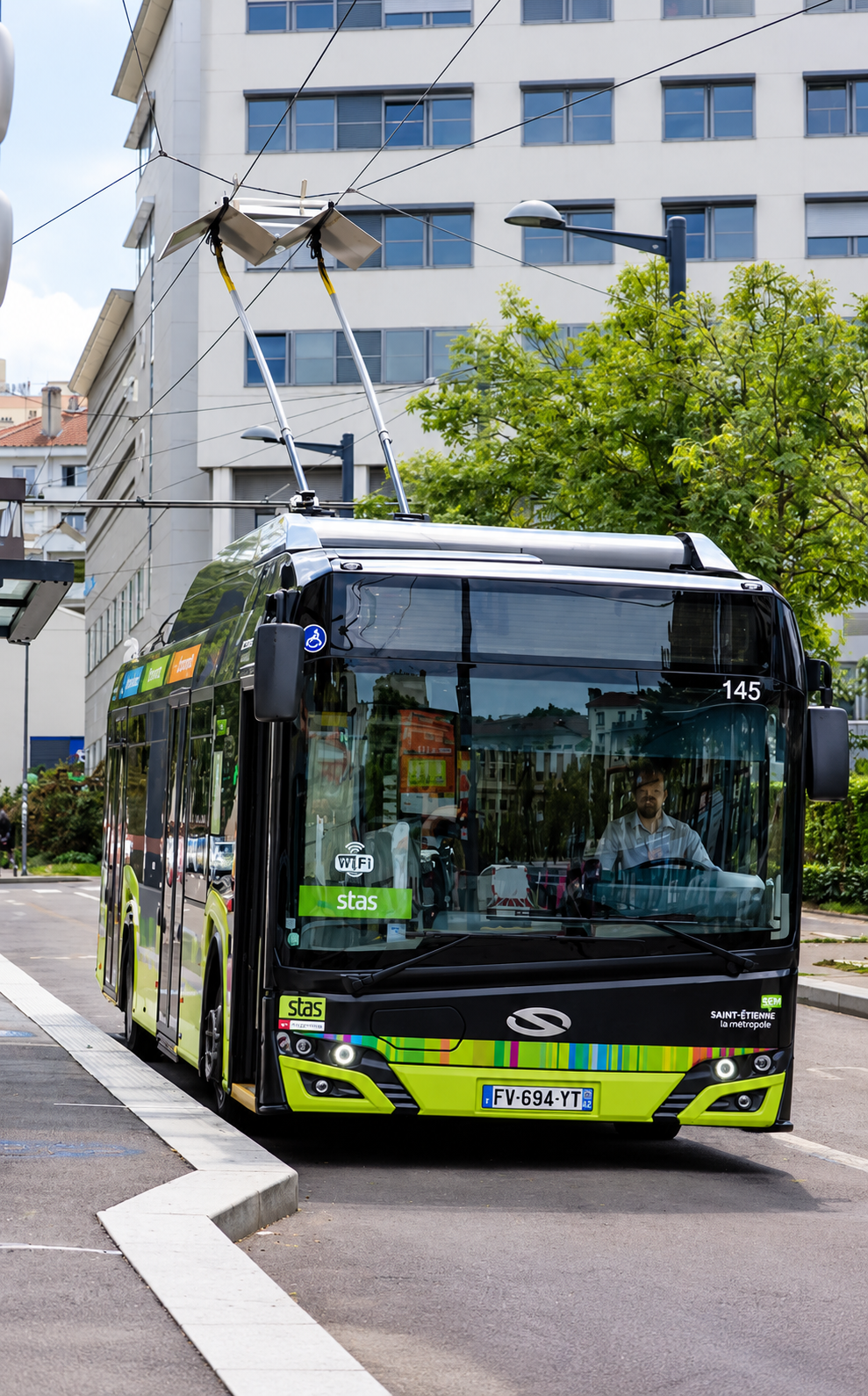
However, the programme is not limited to the development of M6+. Saint-Étienne Métropole is also preparing the conversion of route M4, which runs between Bellevue and Châteaucreux, to trolleybus operation; a separate public procurement procedure for infrastructure development was launched for this purpose in 2026. The development of the two routes is interconnected, with potential for the shared use of infrastructure and vehicles. Previously published plans envisage a total of 18 articulated trolleybuses entering service on M6+ and M4, precisely matching the combined total of the eight already delivered and the ten Solaris Trollino 18 vehicles now ordered.