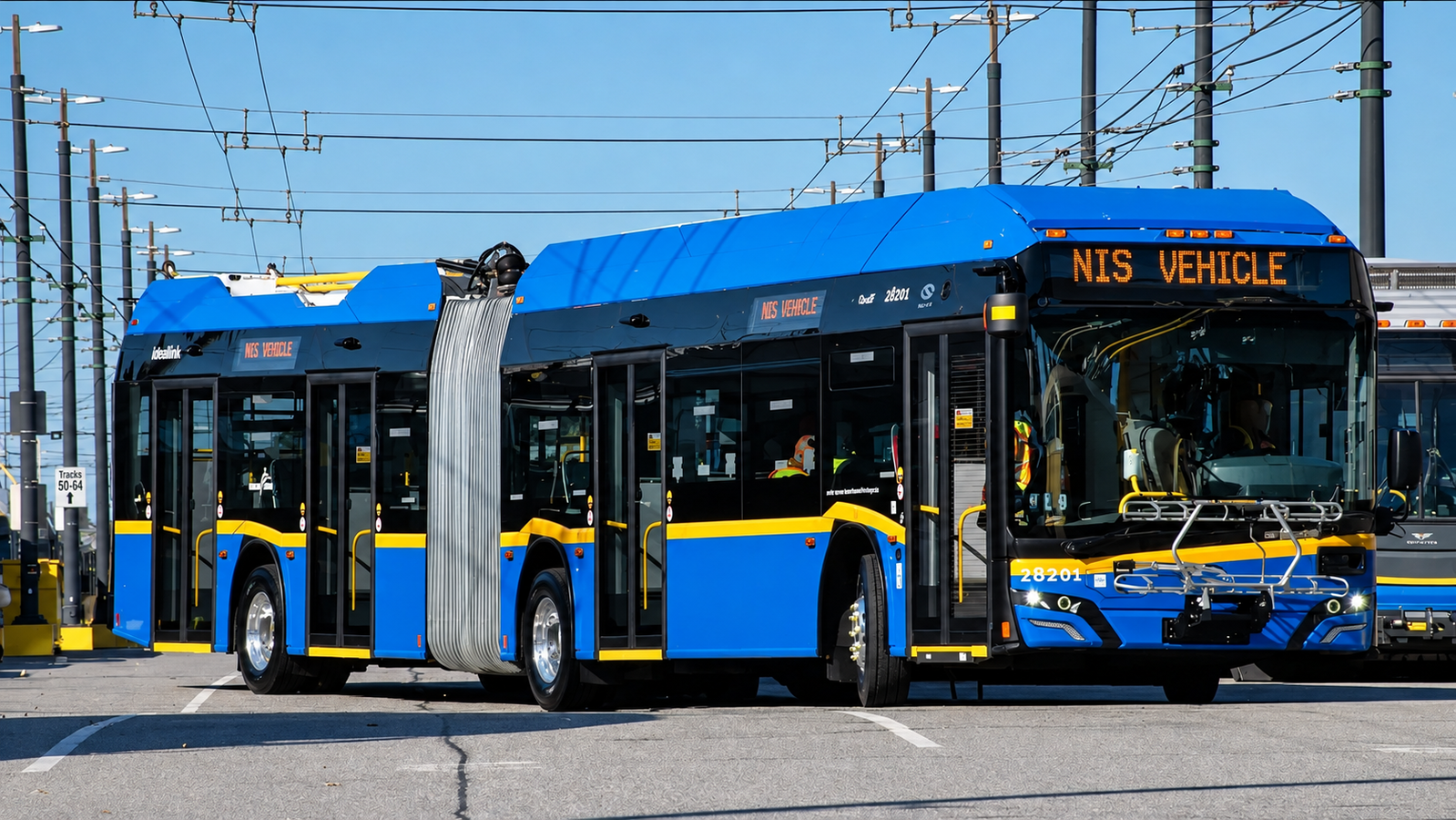
Another step in the renewal of Vancouver’s trolleybus fleet: the first articulated Solaris Trollino has arrived
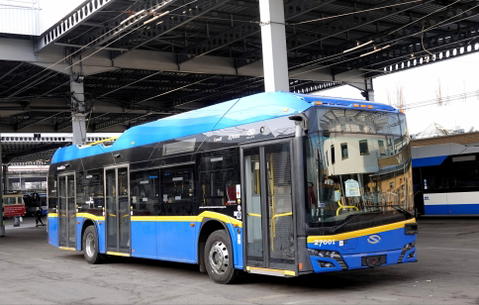
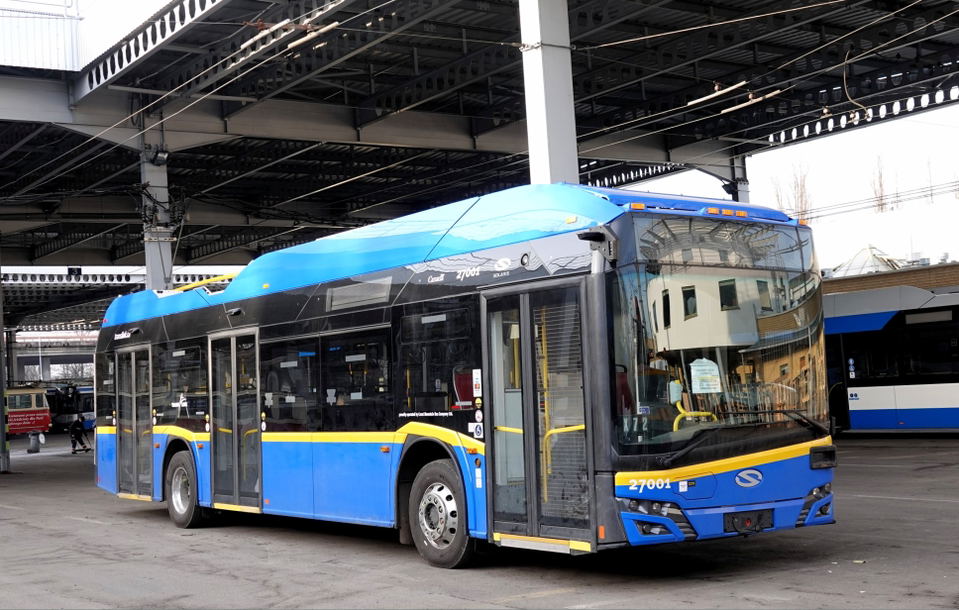
It seems we will gradually have to get used to receiving more and more news about Solaris’s latest developments from across the Atlantic. This time, fresh developments have come from Vancouver: following the prototype in the standard-length configuration, the first articulated example of the Trollino fleet being built for the Canadian city has also arrived. The first images of the 18-metre trolleybus, which is also capable of battery-powered operation, appeared on 10 October. Following test runs in Poland, the vehicle has thus reached another important milestone, as local inspections and operational tests still await it in Vancouver before it enters scheduled service. Meanwhile, the standard-length prototype, which has already been in the city for several months, has successfully completed local test runs, although its passenger-service debut has been delayed for administrative reasons. According to current expectations, the first Solaris Trollino may begin scheduled operation by the end of October.
We presented the articulated prototype in detail back in May, when the vehicle arrived in Gdynia, Poland, for its drivetrain, trolley poles and battery-powered operating function to be assessed under real operating conditions on the city’s trolleybus network. Like the standard-length version, the articulated model is based on the European base platform, but has been adapted in numerous details to North American regulations and the specific requirements of the Vancouver operator. Its fundamental dimensions have nevertheless remained unchanged: even in the articulated version, Solaris has not made use of the maximum vehicle width of 102 inches (2,591 millimetres) permitted in Canada, instead retaining the 2,550-millimetre body width customary in Europe. This also allowed the manufacturer to avoid more substantial structural redesign associated with a wider body.
One of the most important technical features of the four-door articulated version is the drivetrain developed by Medcom for the project, comprising two electric motors with a combined output of 320 kW, which drive both the B and C axles. The torque from the electric motors is transmitted from front to rear via mechanical transmission and propeller shafts to the driven ZF axles. The two driven axles can primarily provide better traction in wintry, slippery road conditions, while also improving the vehicle’s hill-climbing ability on Vancouver’s steeper gradients.
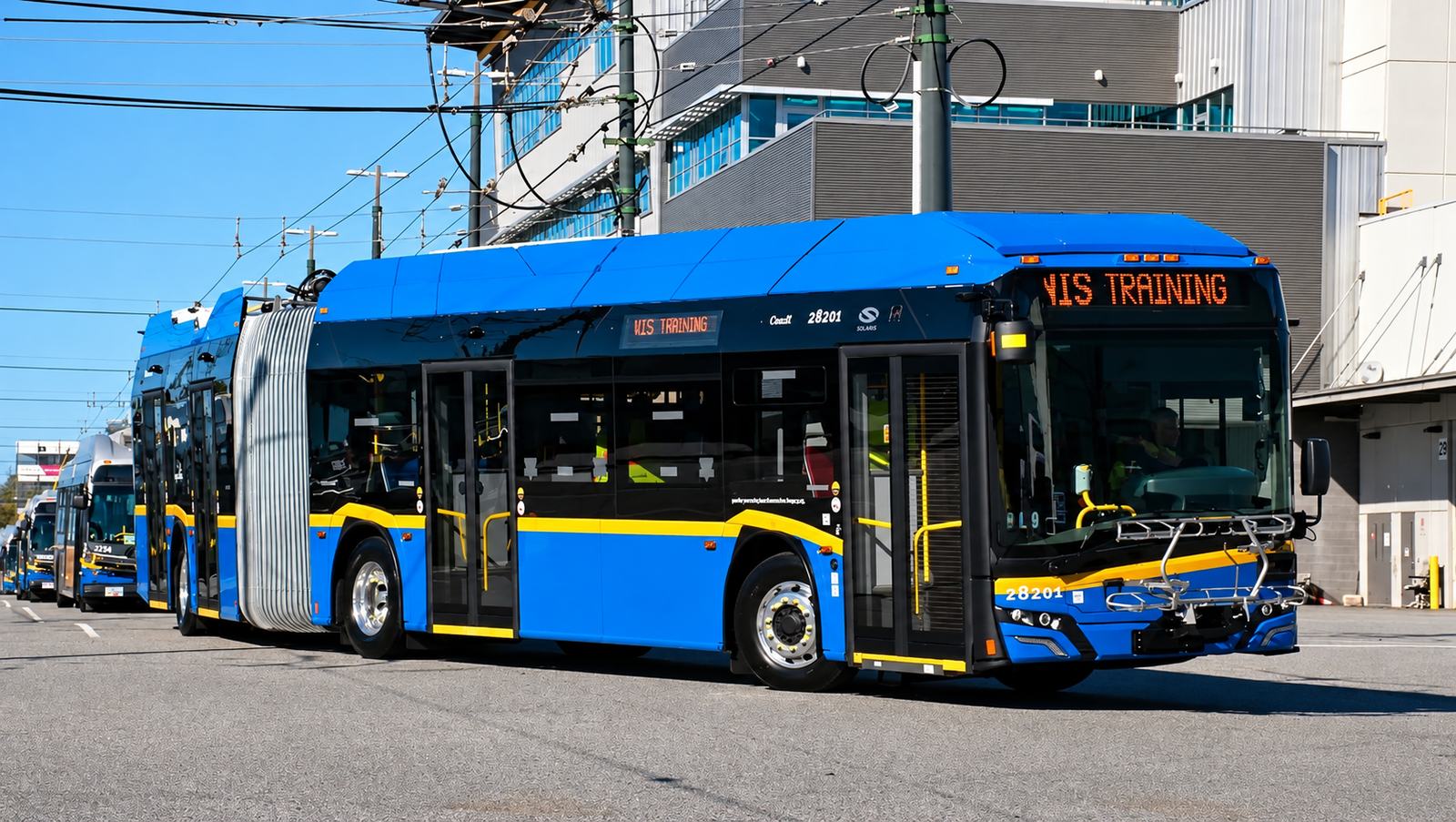
Another particularly noteworthy feature of the vehicle in the North American market is its passenger compartment, which is low-floor throughout its full length, together with the use of four passenger doors. Indeed, partially low-floor, so-called low-entry designs, typically with fewer passenger doors, remain widespread among North American urban buses. Solaris’s solution, by contrast, introduces to Vancouver a layout already well established in European urban transport, facilitating passenger flow and the use of the vehicle’s full length. Step-free boarding is provided, in line with North American operating practice, by an electrically operated wheelchair ramp located at the front door.
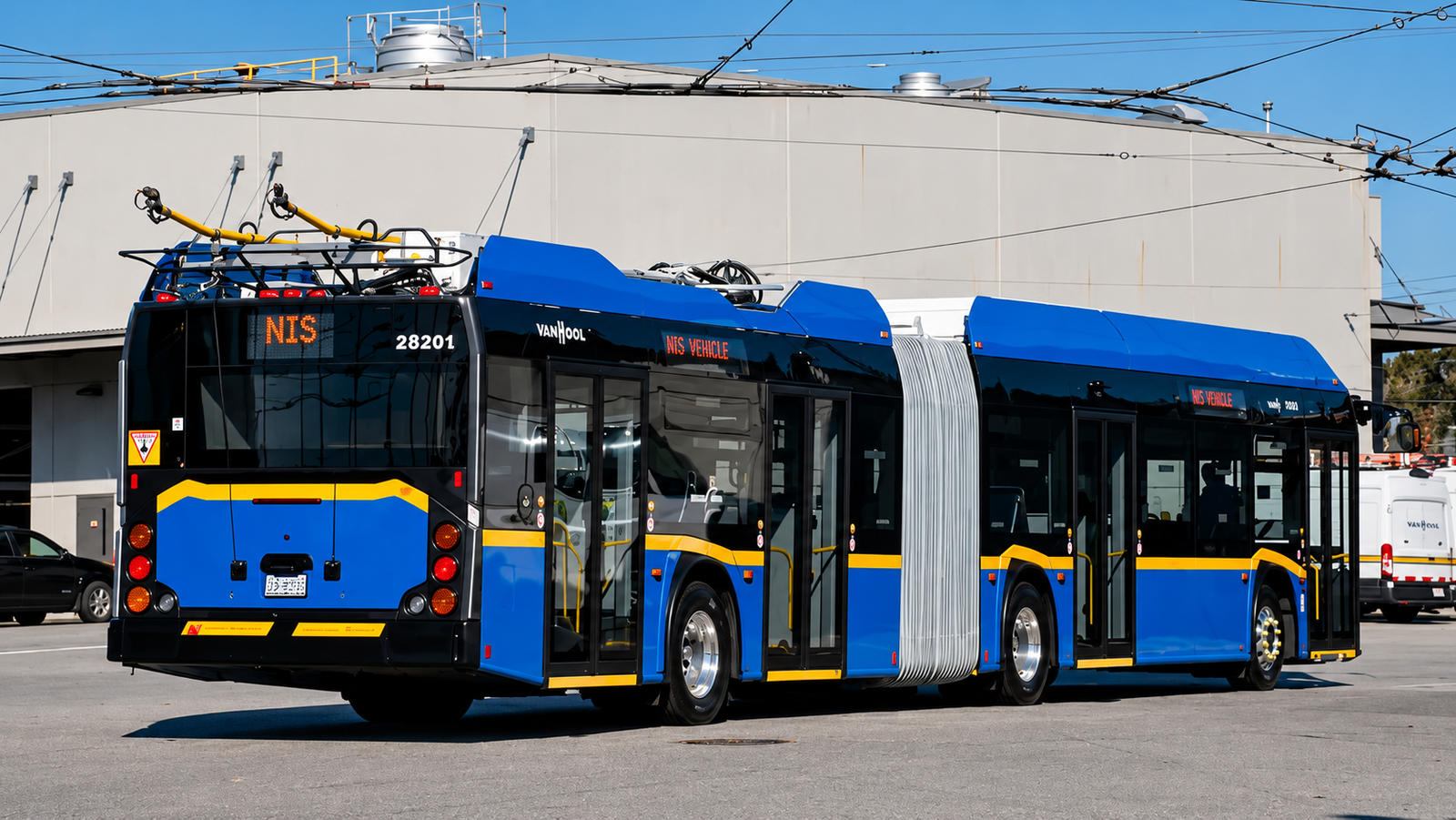
Another important innovation of the vehicles is the onboard battery system, which can be charged from the overhead wires while running and enables battery-powered operation for up to 20 kilometres. This represents a significant advance over the New Flyer E40LFR and E60LFR trolleybuses due to be replaced over the coming years, whose batteries provide emergency battery-powered operation of only a few hundred metres, primarily for avoiding obstacles. The so-called In Motion Charging (IMC) technology could also play an important role in the future expansion of the network, as it makes it possible to extend existing trolleybus routes and serve new routes without having to install overhead wiring along their entire length.
Meanwhile, the Vancouver test programme for the 12-metre standard-length prototype has now been successfully completed. However, the vehicle’s passenger-service debut, originally planned for September, has been delayed because government administrative matters are holding up its handover to Coast Mountain Bus Company, the operator responsible for actual operation. According to the latest report from the site, the first Trollino is expected to begin scheduled service by the end of October. The vehicle will enter service in a distinctive, eye-catching livery intended to celebrate the arrival of the new trolleybus fleet.
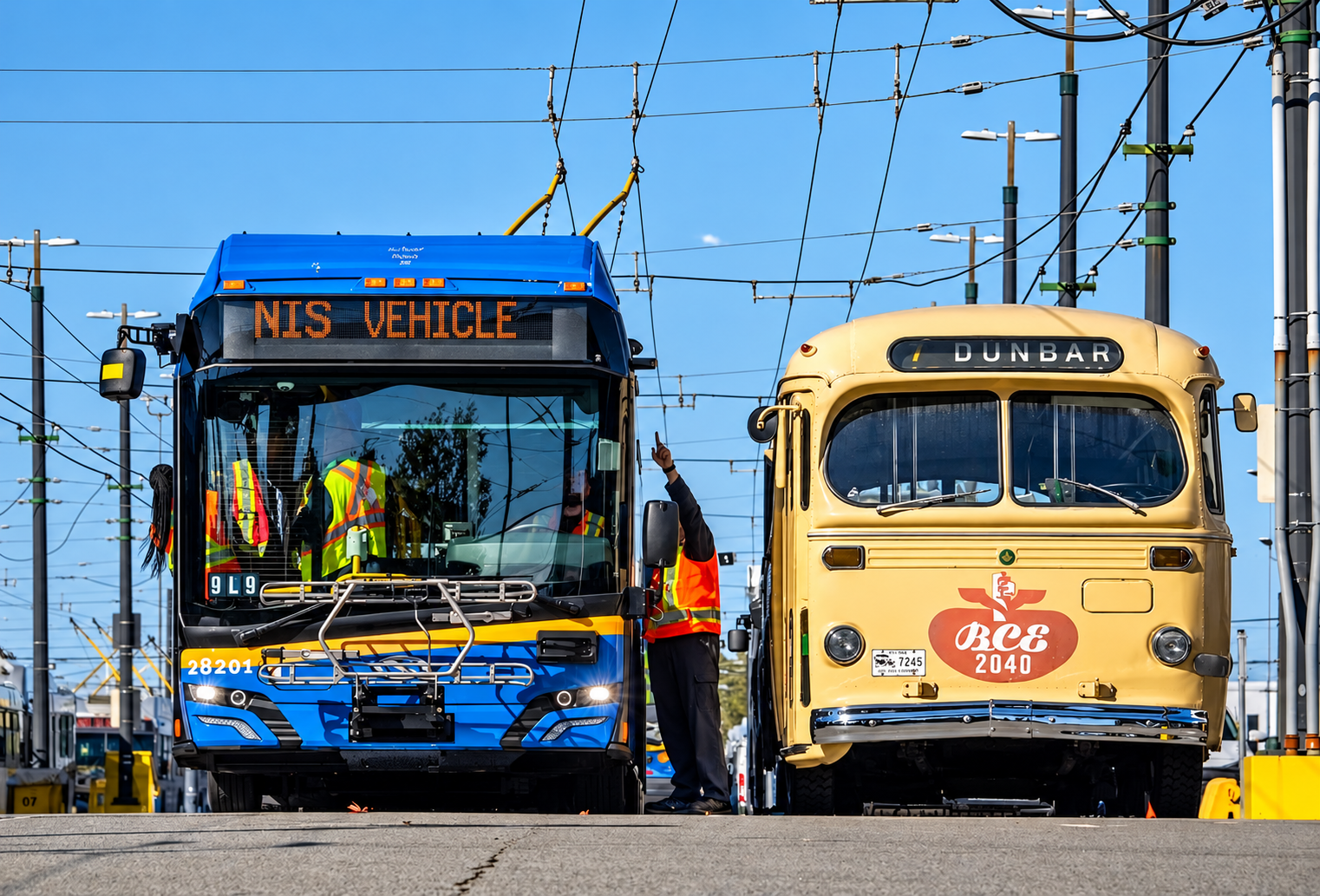
Solaris’s arrival in Vancouver forms part of a major fleet renewal programme. TransLink has so far ordered a total of 275 trolleybuses from the Polish manufacturer, including 183 standard-length and 92 articulated vehicles. The new Trollinos will replace the New Flyer trolleybuses currently in service, which entered operation between 2005 and 2009. The first shipment of series-production vehicles is expected to arrive in Vancouver in mid-2027.
Photos: wiptransit