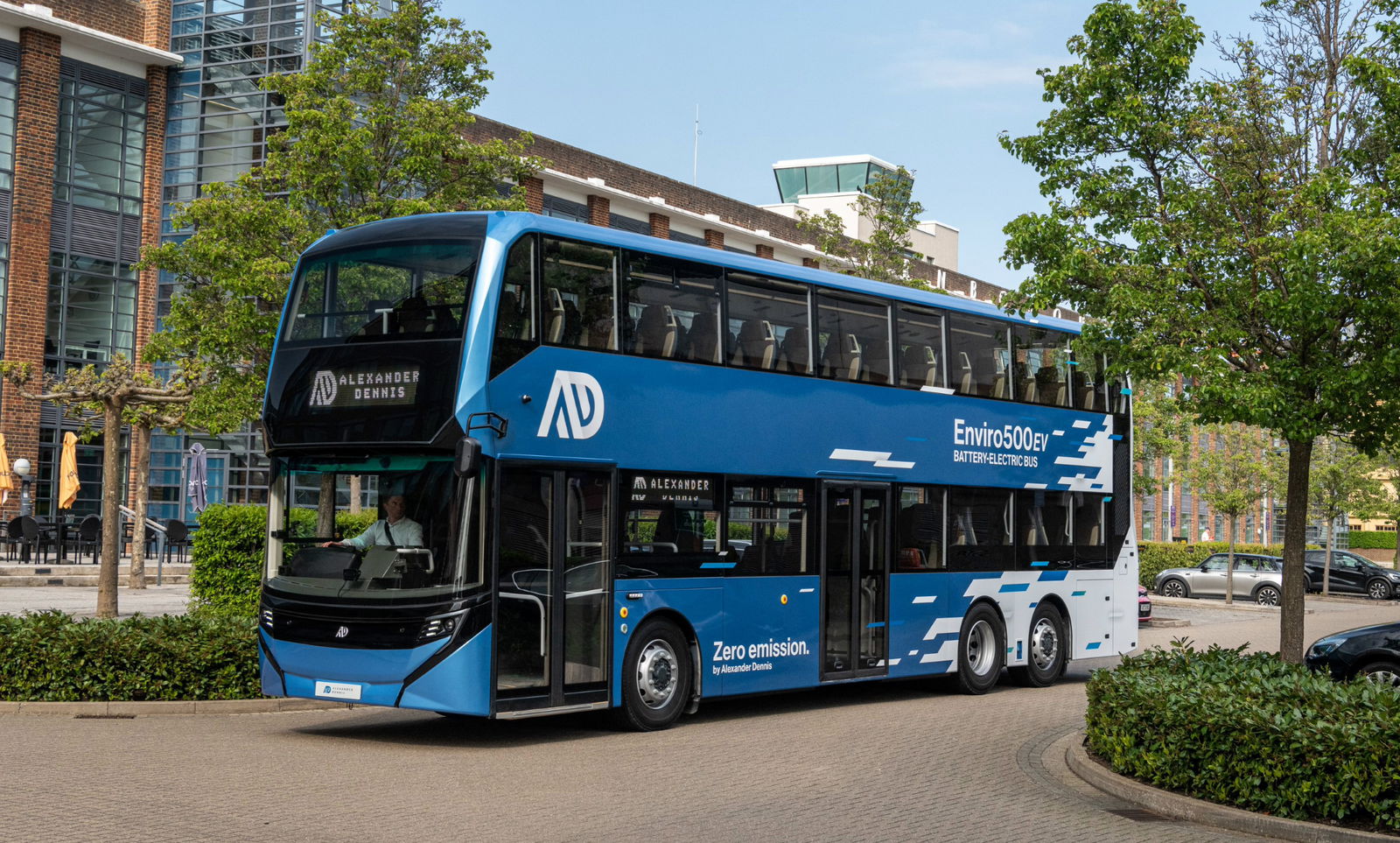
Alexander Dennis blames Scottish Government support policy for decline of bus manufacturing in Scotland
A sharp dispute has emerged between the Scottish Government and Alexander Dennis over the future of bus manufacturing in Scotland, after the British vehicle manufacturer publicly challenged the government’s account of the collapse of previously proposed job-retention support. According to the company, the restructuring of its manufacturing operations was made necessary not by a premeditated intention to close its plants, but by changes to the government support scheme and the resulting absence of bus orders. The latest funding decisions under Scotland’s electric bus programme also lie behind the conflict, having provided China’s Yutong with significant order opportunities while, Alexander Dennis claims, it received not a single new order from the programme.
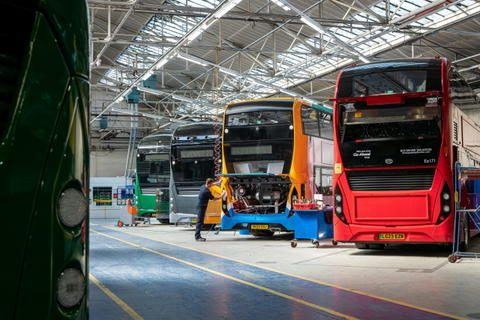
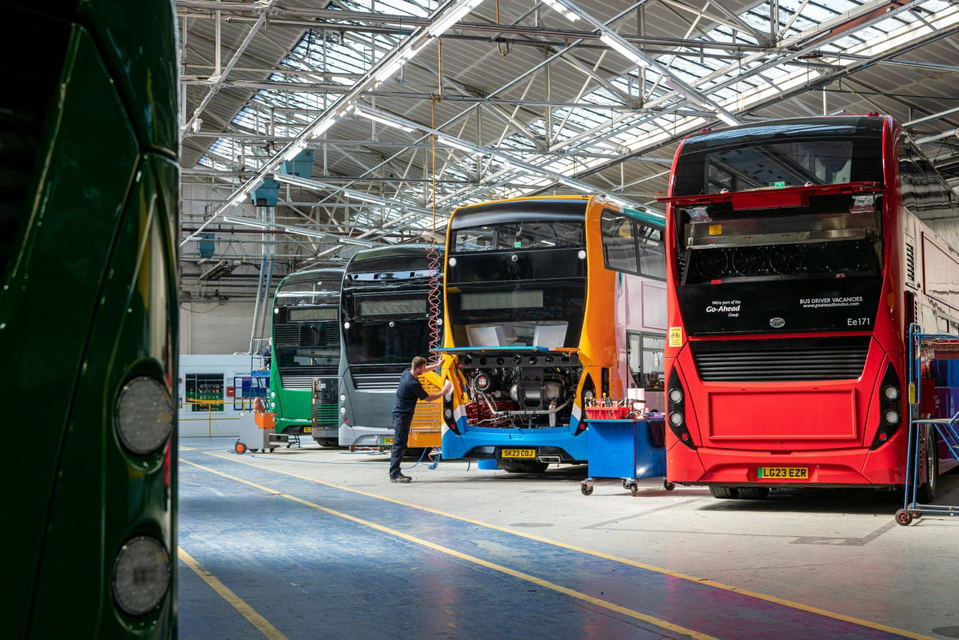
Alexander Dennis, which is owned by NFI Group, announced in June 2025 that it intended to cease bus manufacturing at its two Scottish plants in Falkirk and Larbert due to falling demand and increasingly intense international competition. The decision prompted serious concern, as the company is one of the United Kingdom’s most significant bus manufacturers and its Scottish sites have played a defining role in the British bus industry for many decades. The closure plans were ultimately suspended following discussions with the Scottish Government, after it indicated a further £40 million in funding to expand the second round of the Scottish Zero Emission Bus Challenge Fund, or ScotZEB programme.
The company expected the additional funding to result in orders for several hundred new zero-emission buses, enabling production in Scotland to be maintained. As a bridging measure, the parties agreed a 26-week job-retention support scheme worth up to £4.1 million, which could have covered 80% of affected employees’ wages until the anticipated orders entered the production phase in 2026.
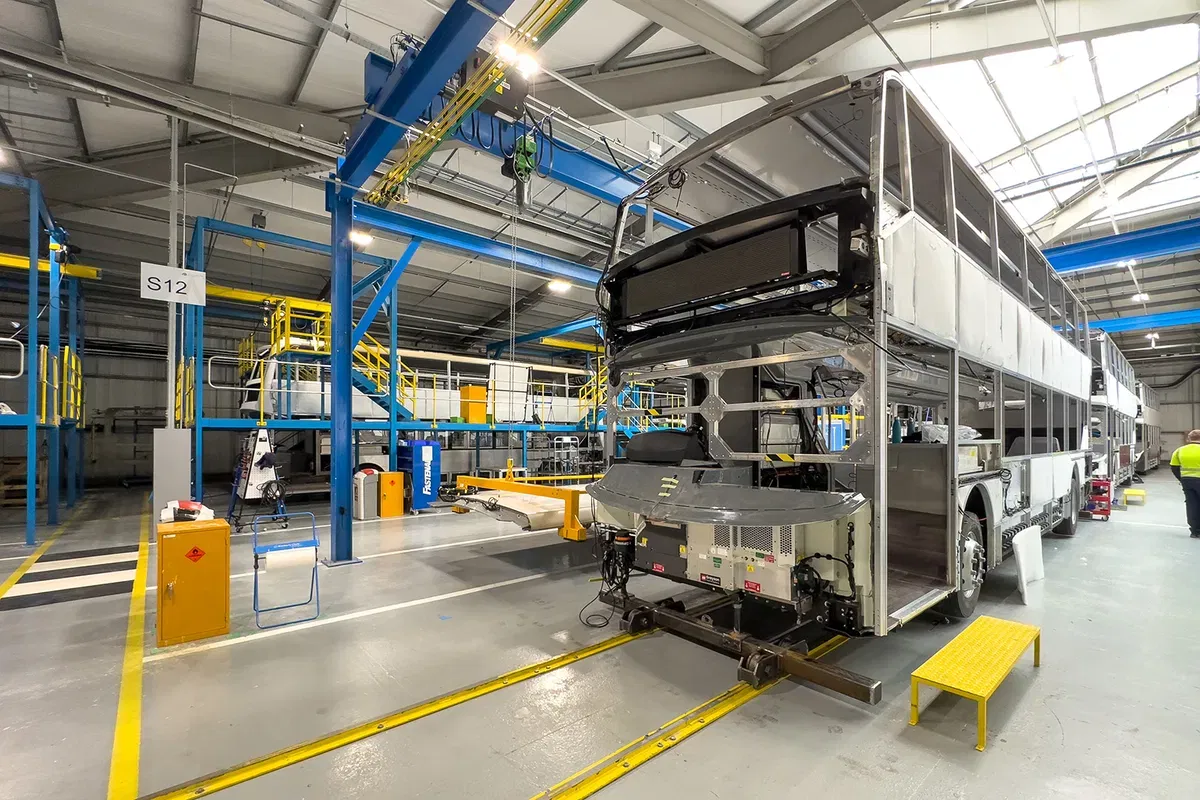
However, the original plan did not come to fruition. The Scottish Government ultimately abandoned the planned expansion of the ScotZEB2 programme and instead announced a new competitive funding round called ScotZEB3. According to Alexander Dennis, this fundamentally changed the order environment on which the earlier job-retention agreement had been based. The company therefore began examining alternative ways of maintaining its manufacturing activities in Scotland and, in March 2026, outlined to Scottish Government representatives the relocation of bus chassis production and assembly to Larbert.
The conflict took another turn when the Scottish Government set out the circumstances behind the failure of the support agreement in a parliamentary statement at the end of September. According to the government, payment of the £4.1 million funding package was conditional on retaining jobs, contractual confirmation of new bus orders and maintaining manufacturing in Scotland. As the company ultimately decided to switch to chassis production rather than body manufacturing, the government said that the conditions of the agreement had not been met, and not a single pound of the support was paid.
In a statement issued on 6 October, Alexander Dennis rejected the interpretation that the scheme had failed solely because the company had not met its commitments. Paul Davies, the company’s President and Chief Executive, stressed that the withdrawal of the originally indicated funding had created an order shortfall under which maintaining the previous production structure was no longer economically justifiable. According to the company, the restructuring was intended not to dismantle production in Scotland, but to preserve it in the long term.
The results of the ScotZEB3 programme, published on 25 March 2026, ultimately confirmed Alexander Dennis’s concerns. The Scottish Government approved a total of £45 million in funding for the acquisition of 334 zero-emission vehicles, including 227 urban and suburban buses and 107 electric coaches, as well as the development of associated charging infrastructure. Five applicants received support: the Rock Road consortium, Lothian, First Bus, Stagecoach and Ember. A distinctive feature of the programme is that the funding is awarded to operators, while vehicle suppliers are selected by the companies carrying out the procurements.
The distribution of the supported vehicles by manufacturer was particularly sensitive for Scotland’s bus industry. China’s Yutong is involved in supplying a total of 166 vehicles, representing more than 52% of the 319 buses and coaches to be newly acquired. The largest item is 100 electric coaches planned for Ember, while Stagecoach would acquire 44 Yutong vehicles, including seven coaches, 21 single-deck buses and 16 double-deckers. First Bus received funding to purchase a further 22 Chinese-built electric double-deckers.
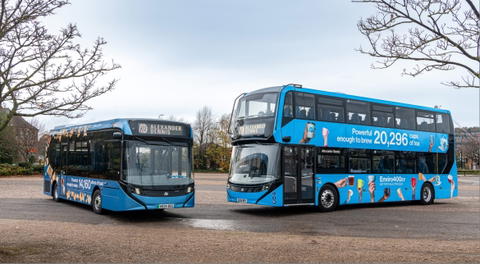
Among British manufacturers, 123 vehicles are associated with Alexander Dennis. Of these, the Rock Road consortium would acquire 69 single-deck and 14 double-deck buses, while Lothian would introduce 40 Alexander Dennis-bodied electric double-deckers built on Volvo chassis. Fellow British manufacturer Wrightbus features with a total of 30 vehicles in the supported projects, supplying ten single-deck buses to Rock Road and 20 electric double-deckers to Lothian. The remaining 15 vehicles involve the conversion of First Bus’s existing double-deck buses to electric propulsion.
However, the March announcement of the results did not automatically translate into final manufacturer orders. In its statement at the beginning of October, Alexander Dennis specifically stressed that it had not received a single new bus order from the ScotZEB3 programme up to that point. According to the manufacturer, the smaller-than-expected and more uncertain order book further reinforced its decision to focus production in Scotland on chassis manufacturing.
The funding results drew criticism not only from Alexander Dennis. Wrightbus management also objected that a programme financed from British public funds was providing significant order opportunities to Chinese manufacturers, while the domestic vehicle industry was struggling with underused capacity and employment difficulties. Bus operator McGill’s also challenged the funding decision through legal channels after its application for the acquisition of 33 Alexander Dennis electric buses was rejected.
The Scottish Government, however, argues that ScotZEB3 is not a direct state vehicle procurement scheme, but a support programme intended to encourage investment by bus operators. Awarding the funding is therefore not the same as directly selecting manufacturers. According to the government, the programme’s primary aim is to accelerate emissions reductions in public transport, develop charging infrastructure and encourage the uptake of zero-emission vehicles. In its parliamentary statement of 30 September, the government also stressed that it had supported Alexander Dennis’s technological developments and operations in Scotland with substantial funding in recent years.
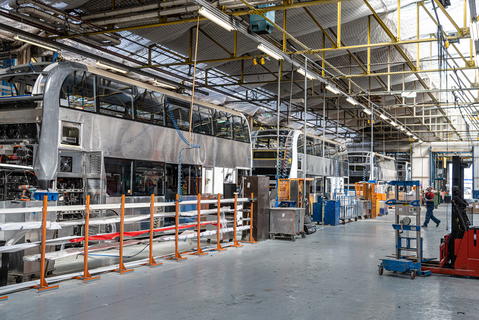
Alexander Dennis has meanwhile invested several million pounds of its own funds in converting the Larbert factory, where bus chassis are currently being produced. The company stresses that the investment was intended not only to preserve skilled jobs and manufacturing capabilities, but also deliberately to retain the option of later reinstating full bus body manufacturing. According to the company’s management, its own expenditure on retaining jobs and production capacity significantly exceeds the previously offered £4.1 million in state wage support.
According to Paul Davies, the UK and Scottish governments should create a long-term, predictable procurement environment that ensures an adequate order book for domestic zero-emission bus manufacturing. The company executive considers it particularly perverse that Scotland’s only domestic bus manufacturer has underused capacity while Scottish taxpayers’ money is also being used to support the purchase of vehicles manufactured abroad. Alexander Dennis has nevertheless indicated that, given sufficient demand, it is prepared to make further investments, expand manufacturing capacity in Scotland and restart full body manufacturing.