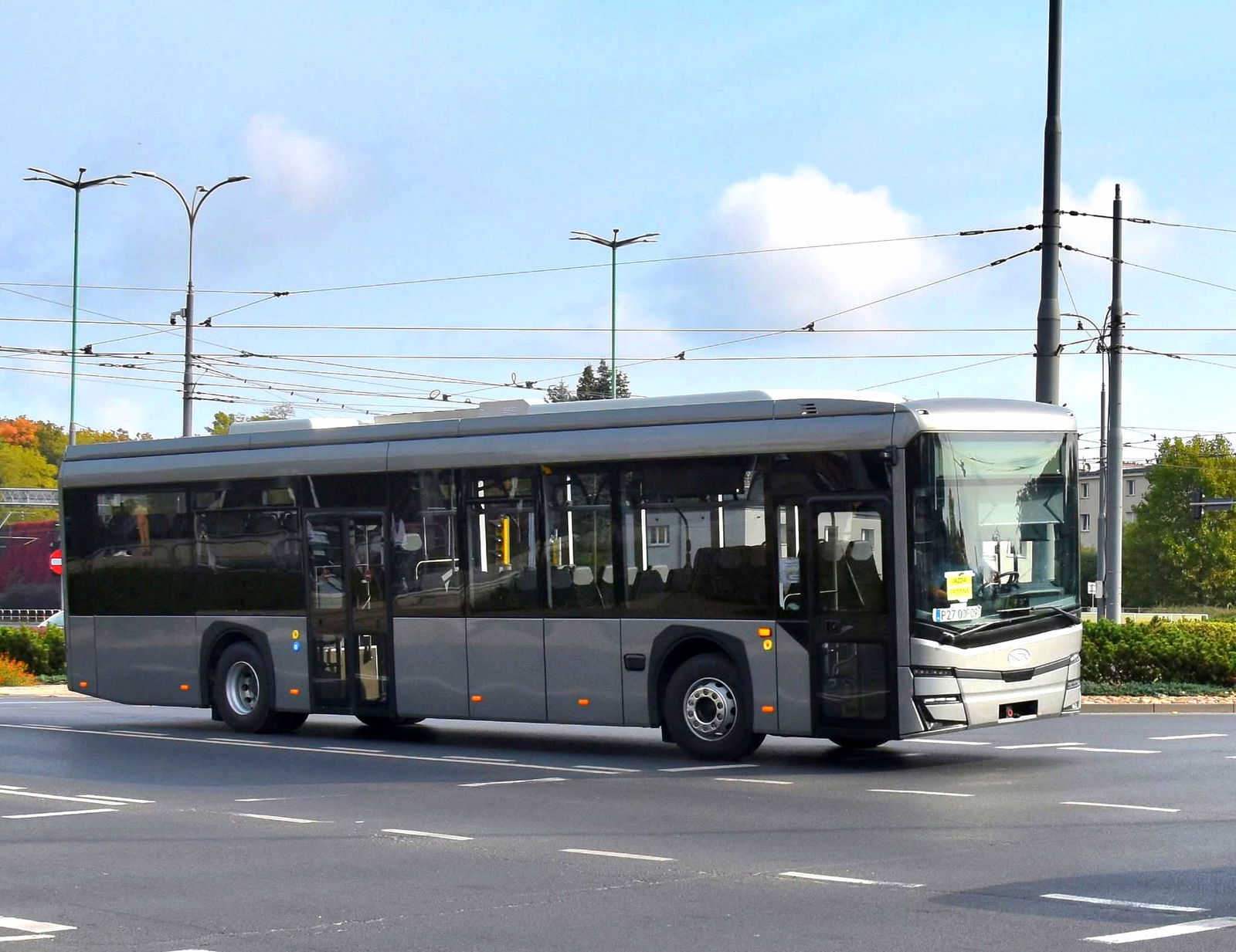
New Solaris on the horizon: electric interurban prototype undergoing road trials
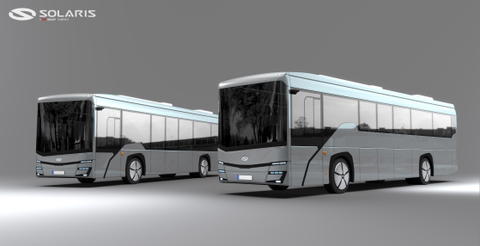
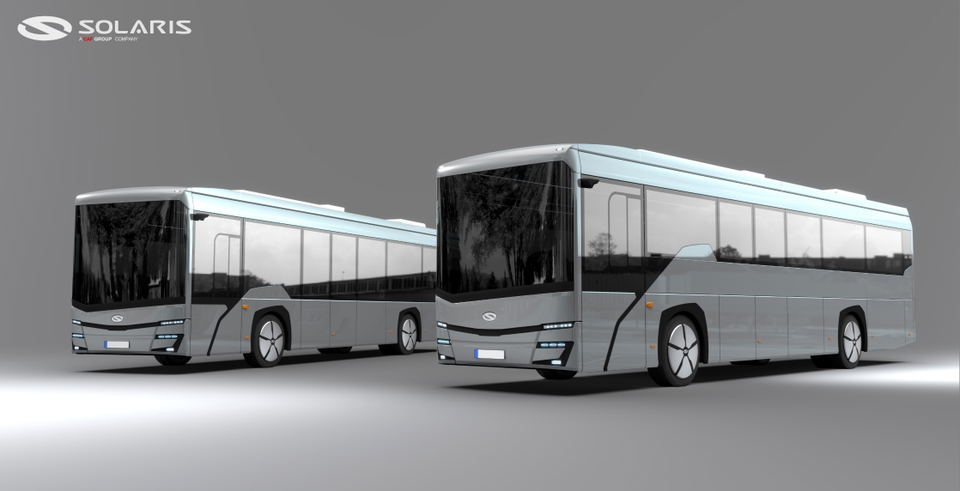
Although its official unveiling is still some way off, a prototype from Solaris’s all-new interurban model range, currently under development and designed specifically around zero-emission drivetrains, has already been photographed on the streets of Poznań. The two-axle, low-entry, all-electric vehicle undergoing road trials is the first tangible representative of a new-generation product line that is structurally distinct from the urban Urbino family. Solaris has made little effort to conceal the prototype’s exterior appearance, as the manufacturer’s previously published renderings had already provided a fairly accurate impression of the new model’s styling. Accordingly, the example tested on Poznań’s public roads in recent days was running without camouflage, in neutral grey paintwork and bearing the Polish words “Jazda próbna”, meaning test run, on its windscreen.
Models in the new range will be available in both low-entry and high-floor versions, with the prototype now appearing on the streets of Poznań representing the former variant. Although Solaris already offers a Class M3/II low-entry electric bus suitable for suburban and regional duties in the form of the tri-axle Urbino 15 LE electric, this model is a member of the well-known urban/suburban Urbino range. By contrast, the new model family is being developed from the ground up as a standalone design specifically for interurban use. According to our current information, its official unveiling is expected in mid-2027, while visitors will also be able to see it at the Busworld Europe 2027 exhibition in the autumn.
Several distinctive styling features of the new model family are already clearly visible on the prototype now photographed. While the front end – above all in the distinctly asymmetrical lower edge of the windscreen – retains Solaris’s current design language, albeit with somewhat more angular lines than the Urbino, and the trim elements beneath the driver’s window and around the wheel arches are similarly styled, the rear is far less distinctive and has visibly moved away from the stylistic world of the urban model family. It is as though the designers ran out of imagination here: at first glance, this is the vehicle’s most nondescript section, and without the brand badge it would be difficult to say with certainty that one was looking at a Solaris bus. The entirely new rear light clusters, arranged vertically in a slanted line, are striking, while the front lighting also differs from that of the current Urbino generation: the familiar separate circular LED light sources have been replaced by narrow, strip-like LED lamps running across the front. Also clearly visible is the spoiler closing off the rear section of the roof fairing, the design of which the manufacturer had already shown in earlier renderings. Its function goes beyond appearance: owing to the higher cruising speeds typical of interurban operation, Solaris has also paid particular attention to the aerodynamics of the new model, with the spoiler helping to reduce drag by creating a defined airflow separation edge.
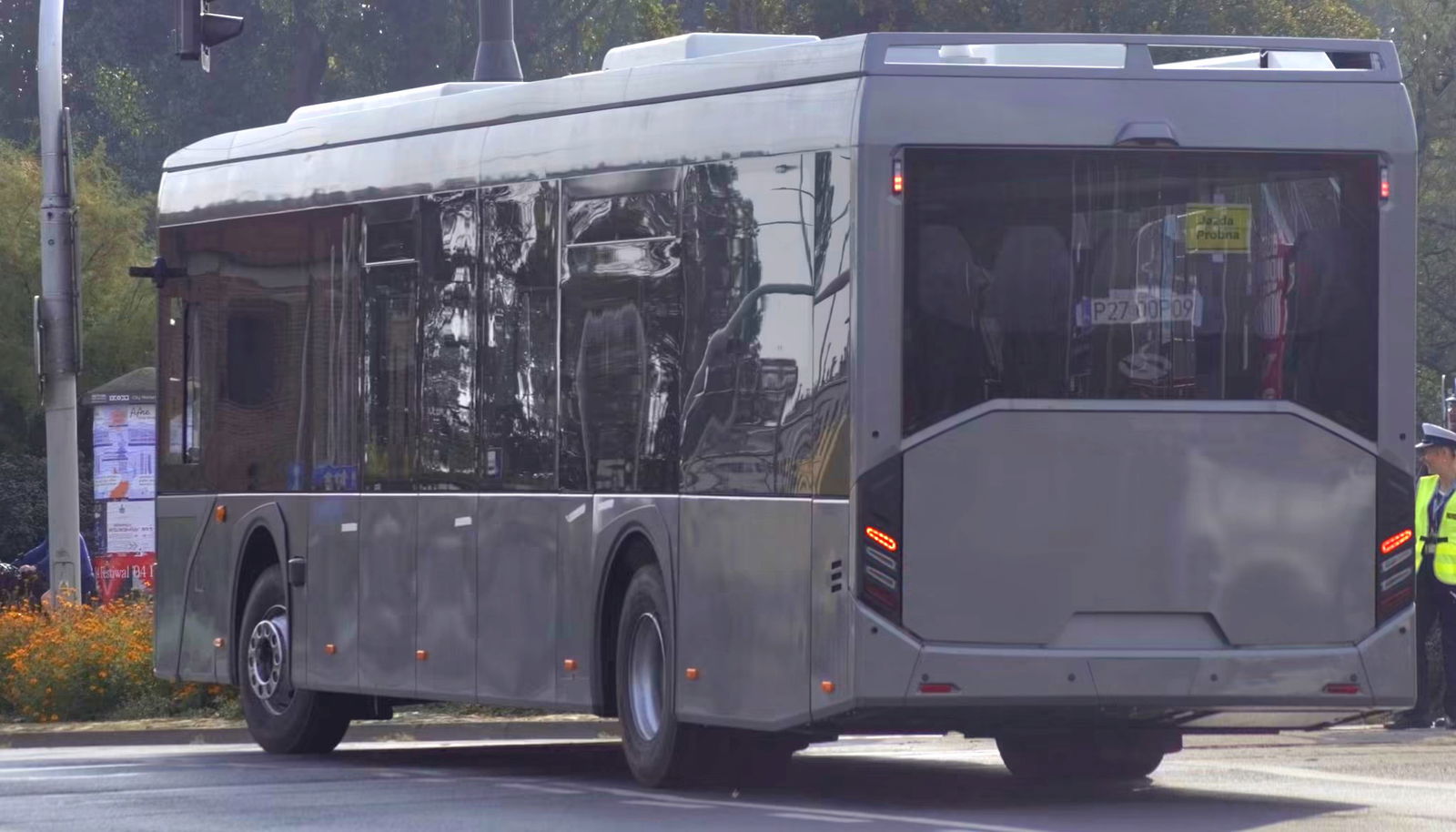
In the first phase, the new model family will be produced in two-axle versions measuring 10.8, 12.1 and 13.1 metres in length; later, a 15-metre variant with an actively steered third axle may also be introduced. The modular design will be available with both battery-electric and hydrogen fuel-cell drivetrains. Direct propulsion in the battery-electric versions will be provided by a centrally mounted electric traction motor with peak output of 410 kW and maximum torque of 3100 Nm, while installed battery capacity may range from 260 to 620 kWh depending on configuration. Both NMC and LFP cell chemistries are planned, with the batteries capable of being installed in the rear overhang, beneath the floor or on the roof. The hydrogen-powered variants will receive a Ballard fuel-cell system, although this drivetrain will not be available for the shortest, 10.8-metre version.
Cover photo: Grzegorz Woźniak