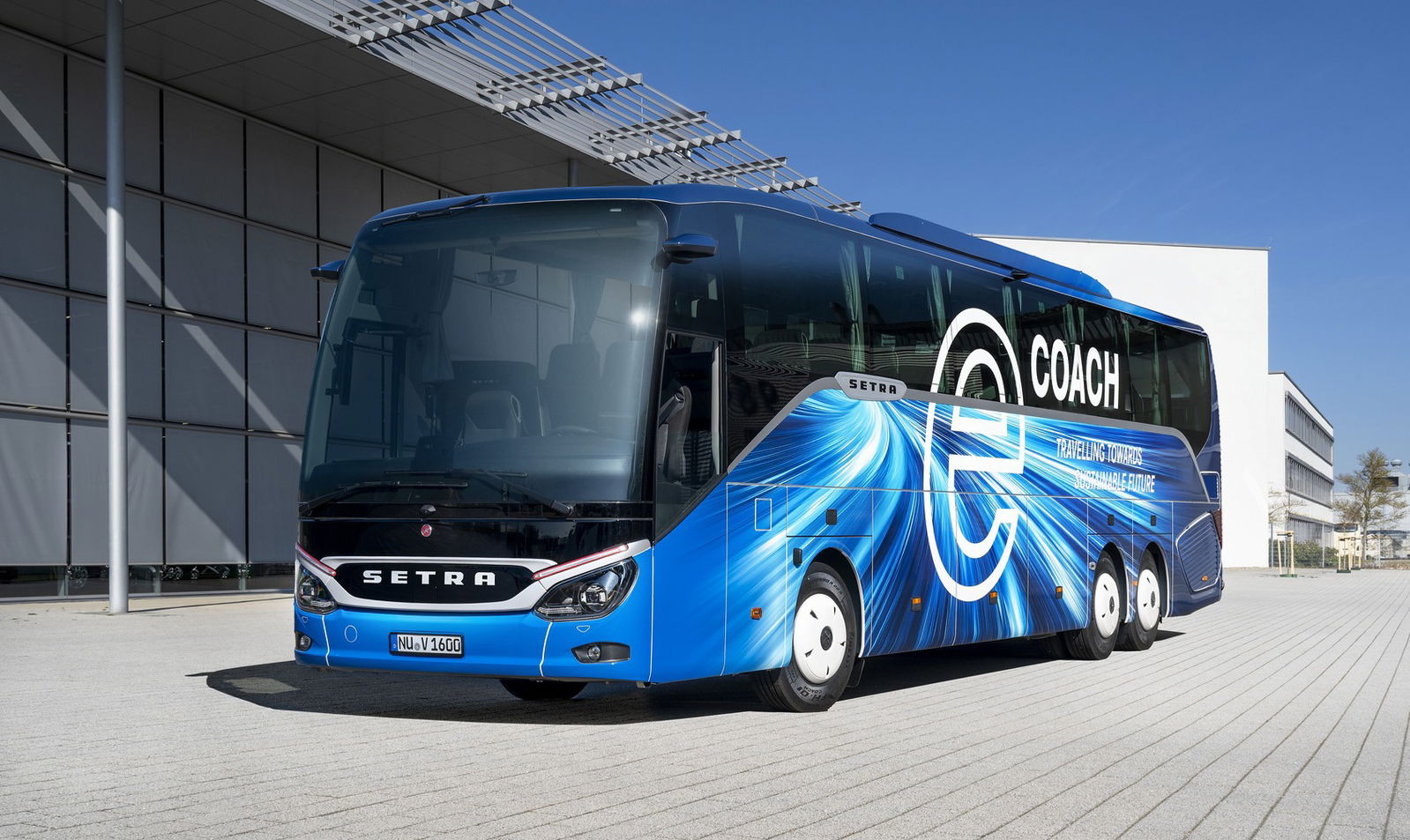
It will be a lack of infrastructure, not vehicles, that holds back the uptake of zero-emission coaches
Europe would need roughly 35,000 high-power charging points and 2,000 hydrogen refuelling stations for zero-emission long-distance buses to appear on the roads in significant numbers in the coming years, Till Oberwörder, head of Daimler Buses, said at the TÜV-Verband MobiCon conference. According to the company executive, the decarbonisation of interurban and long-distance buses is now constrained not primarily by vehicle technology, but by whether the charging and energy network infrastructure needed to operate these vehicles reliably, economically and in large numbers is available.
According to Oberwörder, while electric propulsion is increasingly considered an established and viable solution in urban transport, the transition is a far more difficult task in the case of interurban and, especially, long-distance buses. This is not simply because these vehicles cover greater daily mileages and require larger energy reserves, but also because the infrastructure required for their operation is still far from being available at adequate density and capacity across Europe.
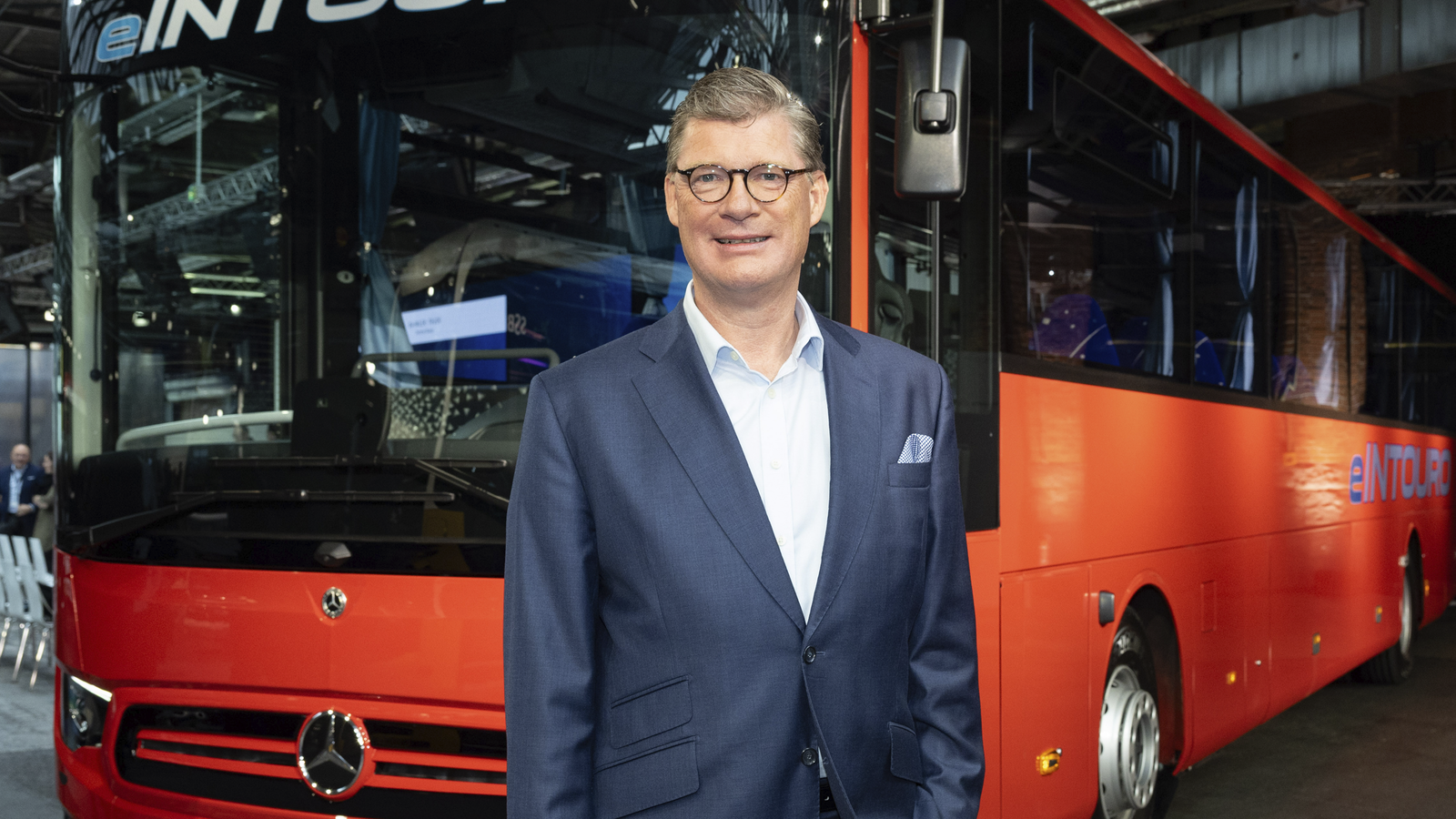
The head of Daimler Buses believes that the European Union's current infrastructure provision is still a long way from this. Today, around 1,500 charging points capable of serving heavy-duty vehicles are available within the EU, while there are even fewer hydrogen refuelling stations. However, this network is nowhere near sufficient for significant numbers of zero-emission long-distance buses to appear on European roads in the coming years. According to Oberwörder, meeting the EU's 2030 CO₂ targets would require roughly 35,000 high-power charging points and 2,000 hydrogen refuelling stations along the main European transport corridors, as well as several thousand additional chargers at bus-specific destinations such as city centres, tourist attractions, sports facilities or other key stopping points.
This illustrates clearly why electrifying interurban and long-distance transport is a considerably more complex task than in the case of urban buses. The daily operation of an urban electric bus is generally predictable, vehicles typically return to the same depot, and timetable cycles are also more favourable for depot or terminus charging solutions. By contrast, interurban and, especially, long-distance buses cover much greater daily mileages, operate at higher average speeds, and their routes often extend across several regions or even countries, while duty schedules and dwell times frequently leave little scope for charging. In such an environment, the vehicles alone do not provide a solution: operation requires infrastructure tailored to the routes and destinations, which is still unavailable in much of Europe.
Oberwörder's words are also supported by an analysis published by ACEA in June. Based on VECTO data, the organisation representing European bus manufacturers concluded that, while the share of zero-emission drivetrains is already increasing significantly in the urban segment, the interurban and, particularly, long-distance bus market still consists almost exclusively of conventionally powered vehicles. This is especially important because EU emissions-reduction requirements will place this segment under increasing pressure over the next decade, even though the conditions for the transition are still far from being in place.
The situation is further complicated by the fact that today's diesel-powered interurban and long-distance buses already have relatively low specific carbon dioxide emissions, meaning that the substantial fleet-level reduction required by 2030 is unlikely to be achieved merely by refining conventional technology. In the longer term, manufacturers therefore cannot avoid introducing zero-emission drivetrains – but for these to become widespread, bringing vehicles to market alone will not be enough; the infrastructure required to operate them must also be built.
This is precisely where the ACEA analysis and Oberwörder's message converge. Over the next decade, EU regulation will clearly steer the interurban and long-distance segments towards zero-emission technologies as well, but the market transition cannot be placed solely on manufacturers or operators. A long-distance electric bus can become a genuine alternative if high-power charging is available along its routes, if adequate electricity capacity is available at termini and rest areas, if the charging process can be accommodated within the timetable, and if the financial side of the investment also becomes predictable. Without this, even if manufacturers introduce their first electric or other zero-emission long-distance buses, their widespread deployment may remain limited.
At the MobiCon conference, Oberwörder therefore also noted that manufacturers have already begun adapting to the new situation. Daimler Buses, for example, is involved in preparing public charging-network projects, including in cooperation with the cities of Cologne and Munich. However, the company executive made it clear that manufacturer-led initiatives alone will not solve the problem. In his view, this would require a review of CO₂ regulation for heavy-duty vehicles, a much faster rollout of charging and hydrogen infrastructure, and for policymakers to give separate consideration to the specific needs of bus transport, particularly long-distance coach services. In other words, emissions-reduction targets and infrastructure development can only work effectively together.
Till Oberwörder's remarks therefore make it clear that the key issue in the coming years will not simply be vehicle development, but equally whether it will be possible to establish the charging and energy network that can make zero-emission long-distance buses a truly competitive and widely deployable alternative. If this does not happen in time, the decarbonisation of the interurban and long-distance segment will continue to be unable to keep pace with EU expectations – regardless of how many new models manufacturers introduce in the meantime.